
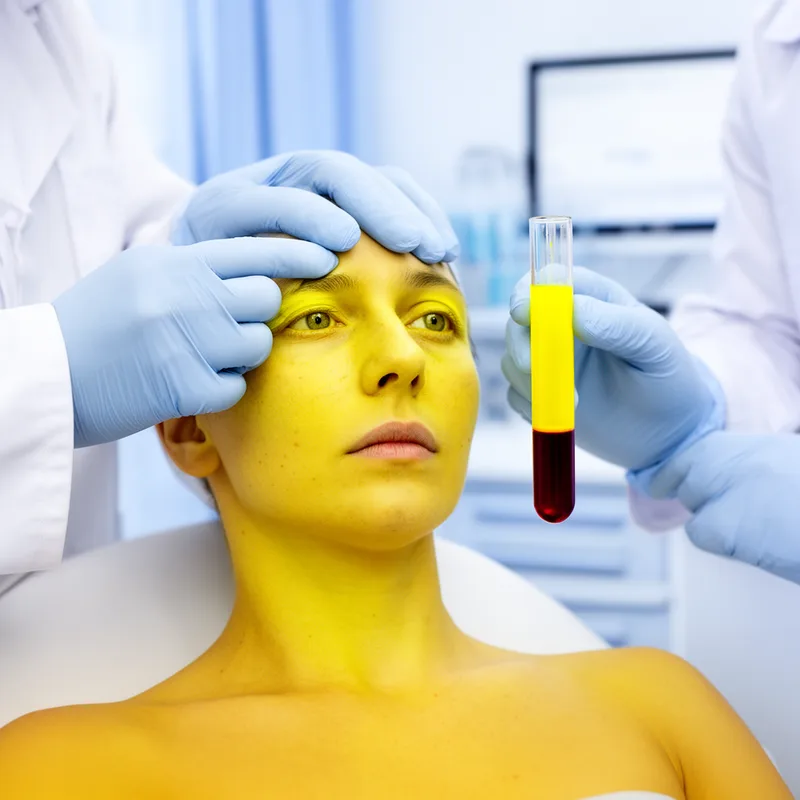
hyperbilirubinemia


 1
9.9
1
9.9
- noun
- /ˌhaɪpərˌbɪləˈrubɪˌniːə/
- Specialized
 :
hiperbilirrubinemia
:
hiperbilirrubinemia
- A high level of bilirubin indicates hyperbilirubinemia.
Examples
-
The doctor explained that hyperbilirubinemia resulted from the liver not processing bilirubin effectively.
-
Hyperbilirubinemia can cause jaundice, making the skin and eyes appear yellow.
-
Doctors monitor patients with liver disease for signs of hyperbilirubinemia.
-
Newborns are often screened for hyperbilirubinemia in the first few days of life.
-
Severe hyperbilirubinemia can cause neurological complications if left untreated.
-
The doctor diagnosed her with hyperbilirubinemia.
-
Newborns often experience hyperbilirubinemia, which is monitored closely by pediatricians.
Compounds

- Specialized
High levels of a yellow blood substance in newborn babies that make their skin and eyes yellow

- Specialized
A high level of bilirubin in a newborn's blood that makes the skin and eyes yellow
Surface Forms
Morphology
hyperbilirubinemia = bilirubinemia (opaque) = hyper + bilirubin + emia
The word is built by adding hyper- to bilirubinemia, but the medical base bilirubinemia itself is specialized and not likely known by an average B1 learner.
Etymology
Hyperbilirubinemia breaks into parts: hyper- meaning 'too much', bilirubin the yellow substance from the liver's 'bile', and -emia meaning 'in the blood', like in anemia. So hyperbilirubinemia literally means 'too much bilirubin in the blood', which is why it often causes yellow skin called jaundice.