
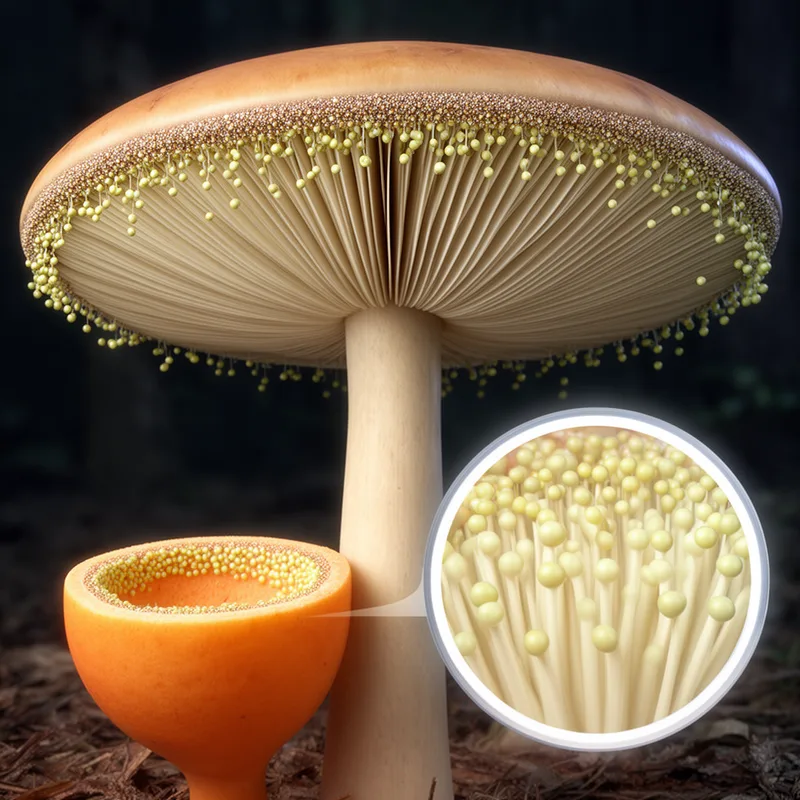
hymenium
9.9
A layer of cells on a mushroom or cup-shaped fungus where spores form
- noun
- /haɪˈmiːniəm/
- Specialized
:
himeneo
- The hymenium is the layer of tissue on the gills of mushrooms where spores are formed.
Examples
-
A healthy hymenium produces a large number of spores.
-
The hymenium develops on the surface of the mushroom's gills.
-
In some fungi, the hymenium forms inside a cup-shaped structure.
-
Scientists observed changes in the hymenium during the fungus's reproductive stage.
-
The hymenium is crucial for reproduction.
-
During the life cycle of certain fungi, the hymenium plays a vital role in spore production.
-
Researchers study the hymenium to understand how different species of fungi reproduce.
Surface Forms
Morphology
Etymology
Hymenium comes from the Greek root hymen meaning 'membrane' or 'thin skin'. In fungi, the hymenium is the membrane-like layer where spores are made, so the name tells you it is the layer that holds the spores.

