
hydrosphere


 1
7.6
- noun
- /ˈhaɪdrəˌsfɪr/
- Specialized
- The concept of water (which in its totality may be called the hydrosphere) may be one of the most integral of all concepts related to life and the earth and thus is critical to achieving an understanding of the complexity and interrelatedness of earth systems.
Examples
-
There is evidence in the hydrosphere, atmosphere, and of course cryosphere.
Blog text (34) -
The future of ecohydrology also promises to help our understanding of the complex interactions of the biosphere and hydrosphere with the "anthroposphere" (figure 5).
Academic text (2010) -
It's all at your hydrosphere.
Blog text (33) -
And it took quite a while for it to cool down to establish the hydrosphere and the, the, the globe as it's known today.
-
While that cycle can affect how heat is moved around in the atmosphere (and hydrosphere), ultimately the heat must be lost to space via radiation, and the rate at which it is lost is set by the Stefan-Boltzmann Law applied using the temperature of the effective radiating level.
Blog text (30) -
While that cycle can affect how heat is moved around in the atmosphere (and hydrosphere), ultimately the heat must be lost to space via radiation, and the rate at which it is lost is set by the Stefan—
Blog text (30) -
It is true that angular momentum may be transferred reversibly between the lithosphere, hydrosphere, and atmosphere, but the sum of their momentum added to that of the moon is constant.
Blog text (28) -
In the early Universe, as new generations of stars formed using the nuclear reaction products of the old, planets like ours formed with them—and sound waves surged and echoed through their structures and their atmospheres and, later, their hydrospheres too.
Blog text (22) -
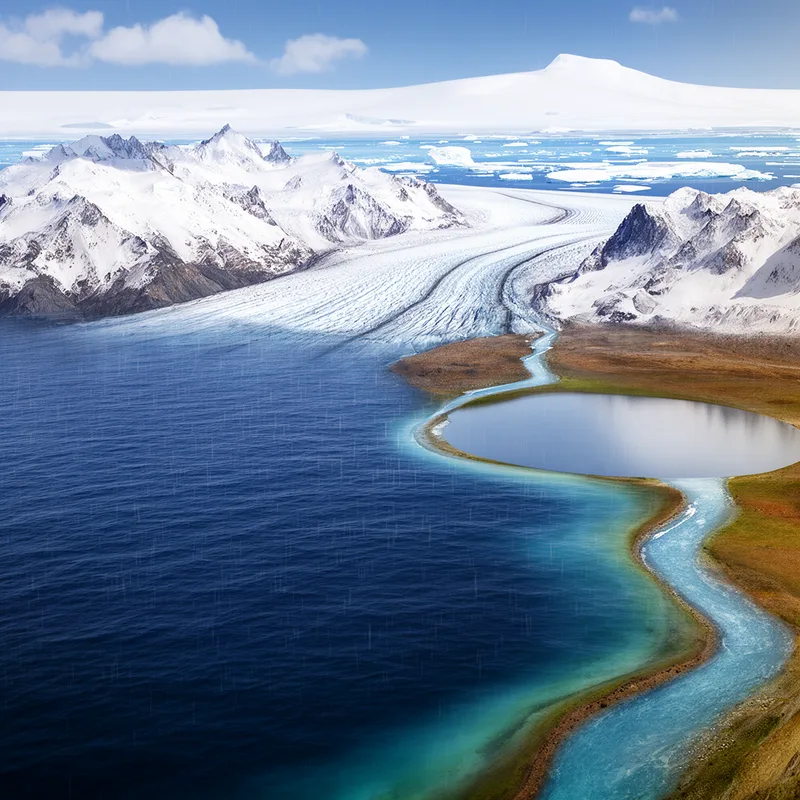
The hydrosphere includes all the water on Earth, such as oceans, rivers, and lakes.
-
Scientists study the hydrosphere to understand how water interacts with the atmosphere and climate.
Surface Forms
Morphology
Etymology
Hydrosphere comes from Greek parts hydro- ('water') and sphere ('globe'). So, it means the 'globe of water' around Earth — all the oceans, rivers, lakes and the water in the air.