
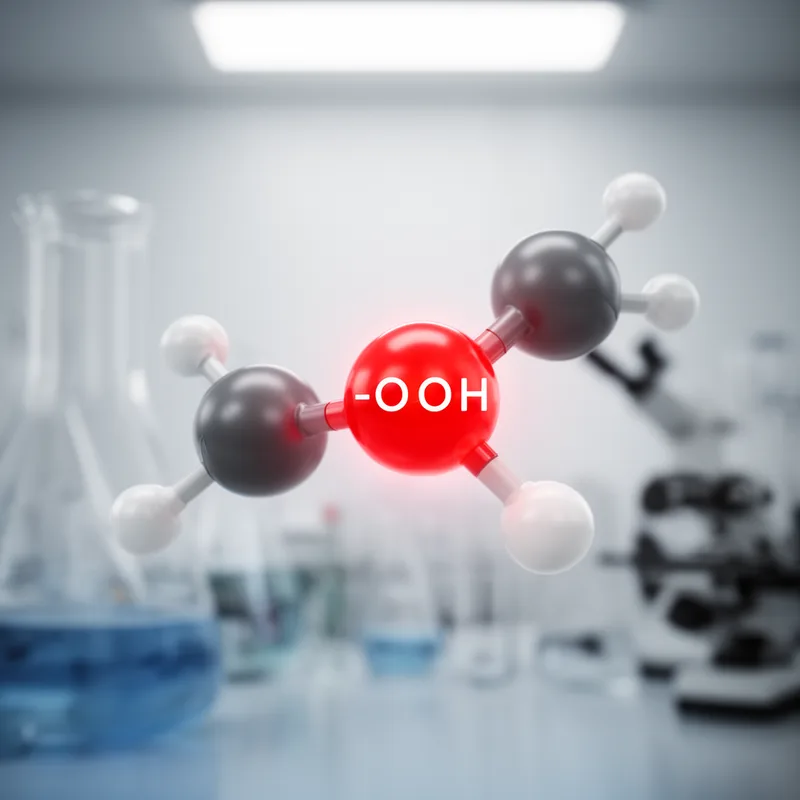
hydroperoxide


 1
8.8
- noun
- /ˌhaɪdroʊpəˈrɒksaɪd/
- Specialized
- Intake of moderate doses of LA has few adverse side effects, while long-term LA supplementation and high chronic doses of LA increased plasma lipid hydroperoxide levels and oxidative protein damage.
Examples
-
The researchers discovered that increasing hydroperoxide concentrations can lead to cellular damage.
-
We have found that there is an abnormal accumulation of hydroperoxides within red blood cells in people who have dementia and Alzheimer's.
Blog text (6) -
In the laboratory, we used hydroperoxide as a reagent to test the oxidation levels of various compounds.
-
When exposed to heat, hydroperoxide degrades more rapidly, making it less effective as a disinfectant.
Surface Forms
Morphology
Etymology
Hydroperoxide breaks into hydro- meaning 'water' and peroxide, which points to 'oxygen' in an extra form. You can see hydro- in familiar words like hydrogen or hydroelectric. So, a hydroperoxide is a chemical that has a small 'water' part, a hydrogen and an oxygen, together with extra oxygen, which explains why these compounds can form in oils and react easily.