
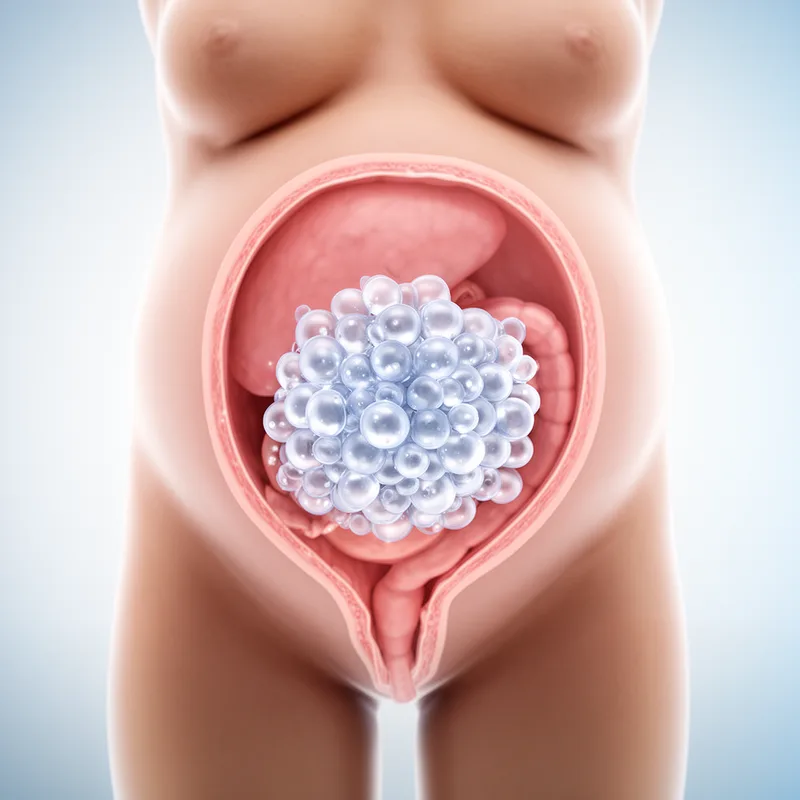
hydatidiform
- adjective
- /ˌhaɪdəˈtɪdɪˌfɔrm/
- Specialized
- The doctor diagnosed her with a hydatidiform mole.
Examples
-
A hydatidiform cyst can develop in organs such as the liver or lungs.
-
The pathology report described the growth as hydatidiform in appearance.
-
The doctor identified a hydatidiform mass during the ultrasound examination.
-
Can a hydatidiform cyst cause complications during pregnancy?
-
The doctor identified a hydatidiform mass during the ultrasound examination.
-
The pathology report described the growth as hydatidiform in appearance.
-
A hydatidiform cyst can develop in organs such as the liver or lungs.
Synonyms
 19
7.2
19
7.2

Relating to a small sac in the body that is not normal and often filled with fluid

Having the shape of a small fluid-filled sac inside the body

Closed inside a small pouch in the body, often in tissue
Compounds

- Specialized
A rare growth in the womb during early pregnancy that forms fluid-filled cysts and often causes loss of the baby
Surface Forms
Morphology
Etymology
Hydatidiform comes from hydatid, from the Greek hydatis meaning 'a drop', plus the part -iform meaning 'in the shape of'. So something called hydatidiform looks like a small, drop-like sac or cyst, which is why doctors use the word for certain fluid-filled growths.