

hyaluronan
- noun
- /ˌhaɪəˈlʊrəˌnæn/
- Specialized
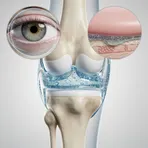
- Hyaluronan plays a crucial role in keeping your joints lubricated and functioning smoothly.
- hyaluronan molecules
- injecting hyaluronan
- hyaluronan solution
Examples
-
In addition, viscosupplementation does not cause excess hyaluronan to amass in the joint because the body is constantly destroying and forming hyaluronan.
Academic text (2002) -
During this procedure, a viscous fluid, such as hyaluronan or Hylan G-F 20, is injected directly into the joint space using sterile technique.
Academic text (2002) -
As more hyaluronan was injected into the joint, more hyaluronan was exported from the joint.
Academic text (2002) -
As more hyaluronan was injected into the joint, more hyaluronan was exported from the joint.
Academic text (2002) -
Because viscosupplementation helps restore homeostasis in the joint, the joint can produce normal hyaluronan and normal SF on its own for several months.
Academic text (2002) -
Because rooster combs are plentiful and are normally wasted, they are an ideal source of hyaluronan.
Academic text (2002) -
In most tissues, the residence time of endogenous hyaluronan ranges from half a day to 3 days (Fraser et al., 1997).
Academic text (2002) -
However, unlike traditional NSAIDs, hyaluronan will not irritate the GI tract because it only acts locally at the target joint.
Academic text (2002) -
Hyaluronan provides an anti-inflammatory function similar to NSAIDs by suppressing the release of prostaglandins that cause inflammation.
Academic text (2002) -
Rheumatologists hypothesized that simply replacing the hyaluronan could increase the viscosity of arthritic synovial fluid.
Academic text (2002)
Synonyms
 1
4.6
1
4.6

A thick natural liquid in the body that holds water and helps joints, skin, and eyes stay wet
Surface Forms
Morphology
hyaluronan = hyaluronic (opaque) = hyaluron + an
Although formed from 'hyaluronic' + the noun-forming '-an', the root is a technical combining form unfamiliar to average learners, so meaning cannot be derived from components.
Etymology
Hyaluronan comes from Greek parts hyal- meaning 'glass' and -uron- meaning 'urine' because scientists first found it in the clear, glass-like fluid of the eye and in urine. That's why the name helps you remember that hyaluronan is a clear, gel-like substance that cushions and lubricates joints.