

huntsman's cups
- noun
- US
- The unique pitcher leaves of the huntsman's cups help the plant capture and digest insects.
Examples
-
Botanists discovered a colony of huntsman's cups thriving in the wet peatland of western Ireland.
-
The bog was filled with unusual plants, including several huntsman's cups near the water's edge.
-
Look at that huntsman's cup!
-
What a stunning huntsman's cup!
-
Botanists discovered a colony of huntsman's cups thriving in the wet peatland of western Ireland.
-
The bog was filled with unusual plants, including several huntsman's cups near the water's edge.
-
The unique pitcher leaves of the huntsman's cups help the plant capture and digest insects.
Synonyms
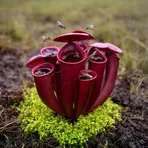
A bog plant with dark red, cup-shaped leaves that trap insects

A plant that eats insects with tube-shaped purple leaves that trap them

A plant that lives in wet ground and has tube-shaped leaves that trap insects
Surface Forms
Morphology
huntsman's + cup
Although a learner can parse 'huntsman's' as 'belonging to a huntsman' and 'cup' as a hollow or cup-shaped object, the phrase is actually a vernacular species name for a specific bog plant and that botanical meaning is not predictable from the parts. Common names for plants are often arbitrary or eponymous and language-specific, so a B1 learner who only knows the constituents would not reliably infer this botanical sense.
Etymology
Huntsman's cups may come from the way the plant's pitcher leaves form small, cup-like shapes that trap insects and help the plant feed. So huntsman suggests a 'hunter' and cups points to the cup-shaped leaves, which explains the name.

