

humaniform
- adjective
- /ˈhjuːmənɪfɔrm/
- The artificial intelligence responded in a humaniform way, showing empathy and understanding.
Examples
-
Her conversational robot displayed surprisingly warm responses, making its interactions feel oddly humaniform to users.
-
Writers often create humaniform characters to help readers relate to non-human beings.
-
The robot displayed humaniform characteristics during the interaction.
-
Scientists are developing humaniform AI to improve communication.
-
The artificial intelligence responded in a humaniform way, showing empathy and understanding.
-
Her conversational robot displayed surprisingly warm responses, making its interactions feel oddly humaniform to users.
-
The robot displayed humaniform characteristics during the interaction.
Synonyms

 2
4.2
2
4.2

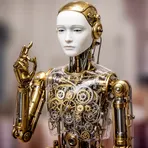
Being like a person in how it looks or acts

Having the shape and qualities of a human, like an animal or object

Looks and acts like a person
Antonyms

How Human-Like

Surface Forms
Morphology
Etymology
Humaniform is made from human and -form, where human means 'person' and form means 'shape' or 'type'. So, when something is called humaniform in behaviour, it acts or feels like a person.