
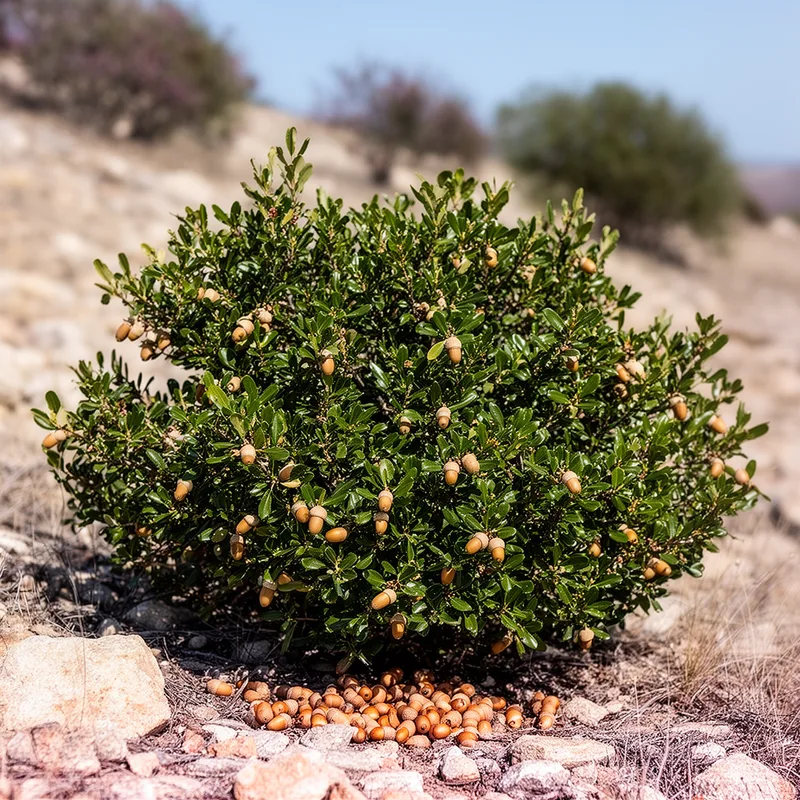
huckleberry oak
- noun
- /ˈhʌkəlˌbɛri oʊk/
- US
- Botanists often recognize huckleberry oak by its distinctive small acorns and shiny leaves.
Examples
-
The huckleberry oak is well adapted to dry, rocky slopes in California.
-
We found huckleberry oak growing alongside manzanita on our mountain hike.
-
The huckleberry oak is native to the southwestern United States.
-
Many huckleberry oaks can be found in Arizona.
-
The huckleberry oak is recognized for its small acorns and glossy leaves that resemble huckleberry foliage.
-
In the warm climate of California, the huckleberry oak thrives on dry, rocky hillsides.
-
During our nature walk, we spotted a huckleberry oak growing next to a cluster of manzanita plants.
Synonyms

 1
7.0
1
7.0

A small oak tree that grows like a bush in dry soil and forms dense bushes
A low spreading oak shrub of western United States mountains with leaves like huckleberry and small acorns
Surface Forms
Morphology
The noun is compositionally descriptive: combining 'huckleberry' (a berry-bearing shrub) with 'oak' (a type of tree) signals a plant related to or resembling an oak with huckleberry-like features. This kind of referential compound naming is cross-linguistically common and thus a B1 learner who knows both constituents would be able to infer the basic meaning.
Etymology
Huckleberry oak comes from how the shrub looks: its leaves and small, shiny acorns remind people of the huckleberry plant and its berries, so they called this low plant an oak. That's why the name helps you picture a low oak with huckleberry-like leaves and tiny acorns.