

housecarl
- noun
- /ˈhaʊsˌkɑrl/
- Archaic
- Each housecarl was trained to defend the king with great skill.
Examples
-
The loyal housecarl followed his lord into every battle.
-
During the invasion, the housecarls formed a shield wall around their leader.
-
The king's housecarl stood watch at the entrance.
-
Many housecarls served their lords with great loyalty.
-
The king's housecarls stood ready, their loyalty unwavering as they prepared to defend their lord against any threats.
-
During the battle, the housecarls fought bravely alongside their noble leader, showcasing their skills and dedication.
-
Each housecarl was sworn to protect the noble, highlighting the importance of their role in medieval society.
Synonyms


 1
9.9
1
9.9
A guard who stands near the king or queen during ceremonies while wearing a Tudor uniform
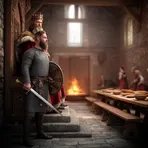
A soldier who guards a king or noble and lives in their household in medieval times
Surface Forms
Morphology
Etymology
Housecarl comes from Old Norse parts hús ('house') and karl ('man'). So a housecarl was a 'man of the house' who could serve as a trusted protector of his lord, which is why the word is used for a personal guard.