
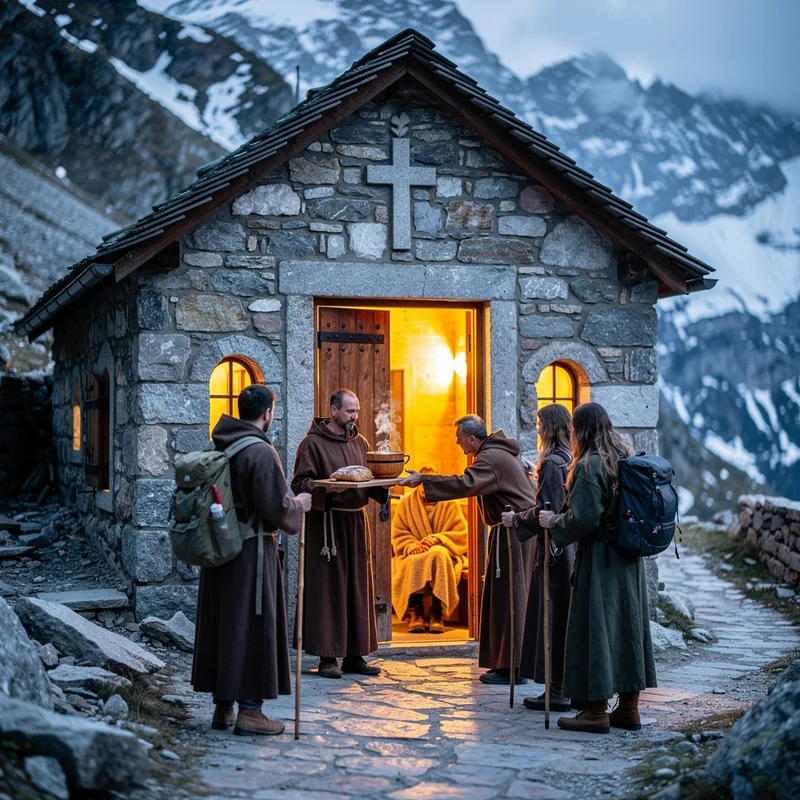
hospice
 4
6.7
4
6.7

- noun
- /ˈhɑːspɪs/
- Archaic
 :
albergue
:
albergue
- During their journey, they stayed at a hospice that provided food and rest for pilgrims.
- hospice care
- hospice services
Examples
-
The hospice was a cool place.
Fiction book (1997) -
- Your monastery is now a hospice run by a Sister Stephen.
-
Hospices were introduced later by Christianity after the fall of the Empire.
Blog text (28) -
For most of history, the family has been the dominant source of care for the sick, disabled, and aged, supplemented by care through shelters or hospices of religious orders.
Academic text (1995) -
Gregory of Tours did not provide any details on how this leprosarium functioned, but he did refer to a church attached to the hospice which was large enough to hold a grand assembly of local abbots and clergymen.
Academic text (2006) -
The travelers found comfort and shelter at the hospice run by the local religious order.
-
Many visitors to the city seek out the historic hospice known for its welcoming atmosphere.
Synonyms
 135
5.0
135
5.0
A place where people stay, like a hotel or room


 1
4.6
1
4.6
A building where travelers can sleep and rest
Surface Forms
Etymology
Hospice comes from the Latin word hospes, meaning 'guest' or 'host', and from hospitium, a 'place for guests'. The same root appears in hospital, hospitality, and host, so a hospice was originally a shelter where travelers and pilgrims could rest and be cared for.