
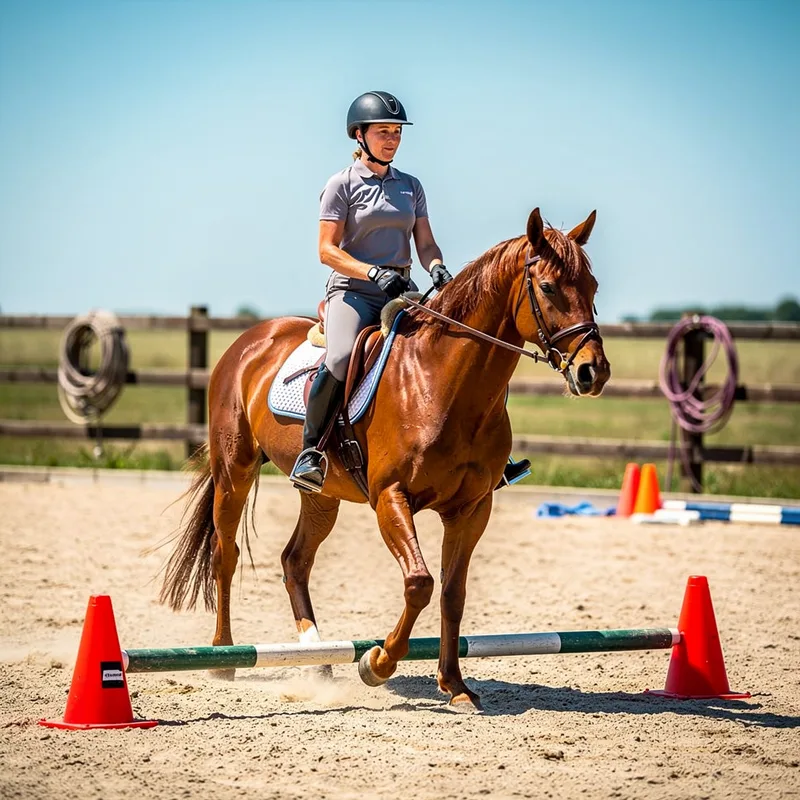
horsemanship
 3
5.9
3
5.9

- noun
- /ˈhɔrsˌmænʃɪp/
- The purpose of this event is to demonstrate the horse's complete and quiet compliance with minimal cuing and the rider's horsemanship.
- feats of horsemanship
- display of horsemanship
- natural horsemanship
Examples
-
Ancient sources state that the Thracians were excellent fighters, advanced in metalworking and horsemanship.
Academic text (2007) -
Competition events recall the importance of ranching and horsemanship in the development of Mexico as a colony of Spain and an independent nation.
Academic text (1994) -
Your horsemanship will never be the same, I think, even when using more traditional training methods.
Blog text (1) -
You are leading horsemanship in such an important direction.
Blog text (1) -
And meanwhile, they would also have physical training, horsemanship, sports, the military arts, and dancing.
-
Should I ever again require horsemanship, I will engage a tutor.
-
Horsemanship is the focus of every element of charreada.
Academic text (1994) -
The Pawnees rode away, showing off their horsemanship, before attacking the herd.
Fiction book (1994) -
The Romans, impressed by their bravery and horsemanship, spared their lives.
-
The summer camp focuses on teaching young riders the art of horsemanship, including how to care for and train horses.
Synonyms
 1
9.9
1
9.9
A skill for riding a horse, often as a sport

A sport and skill for riding, training, and caring for horses
How Proficient

Surface Forms
Morphology
Etymology
Horsemanship breaks into horse, man, and -ship, where -ship means 'skill' or 'state', as in friendship. So horsemanship is the 'skill of being a horse person', which is why it means the art of riding, handling, and training horses.