
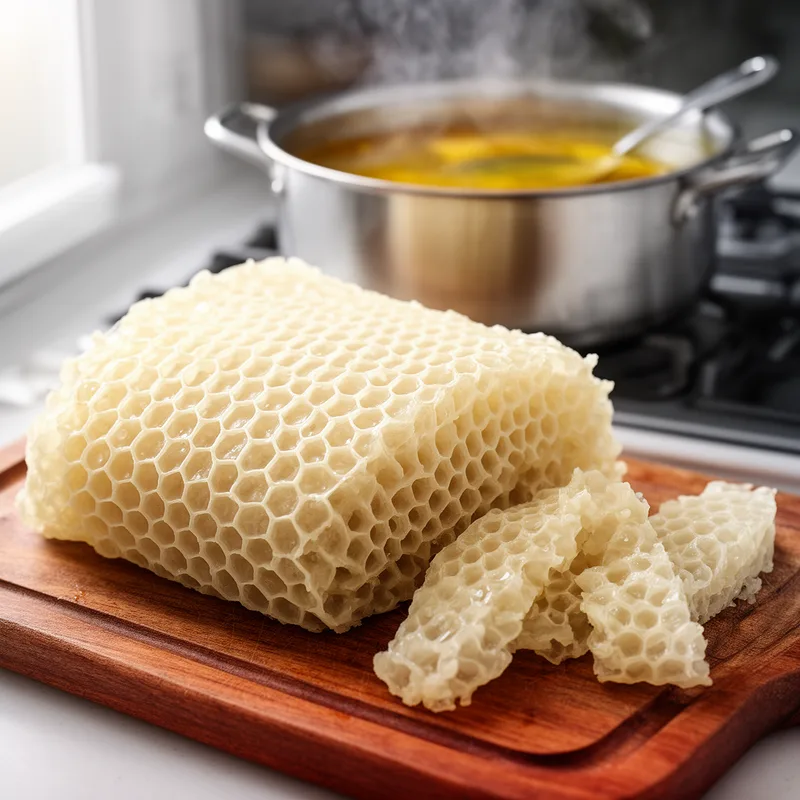
honeycomb tripe
- noun
- /ˈhʌniˌkoʊm traɪp/
- Specialized
- What you'll find in markets most often is "honeycomb" tripe, so named because it looks a helluva lot like the bees' honeycomb.
Examples
-
Honeycomb tripe is great for long cooking; it melts into tenderness well, and the myriad crenellations pick up sauce like nobody's business!
Blog text (18) -
Many chefs consider honeycomb tripe to be a delicacy that enhances the flavor of hearty dishes.
-
The restaurant's special was a rich stew made with honeycomb tripe, simmered for hours until tender.
-
In traditional cuisine, honeycomb tripe is often seasoned with spices and served in savory broths.
Synonyms

 6
7.7
6
7.7

The inside lining of a cow's stomach that people eat
Surface Forms
Morphology
The compound is fully compositional: 'tripe' names the edible stomach lining and 'honeycomb' describes its honeycomb-like, hexagonal texture, so the overall meaning is simply 'tripe with a honeycomb texture.' This noun–noun modification pattern is transparent and common across languages, so a B1 learner who knows both words would readily infer the intended referent.
Etymology
Honeycomb tripe is named for the look of a cow's second stomach: its lining has many small pockets and holes like a honeycomb, and that lining is called tripe. Because the honeycomb texture soaks up soup and flavour, the name helps us remember this 'food' and how it is used in cooking.