
homoscedasticity
- noun
- /ˌhoʊmoʊskɪˈdæstɪsɪti/
- Specialized
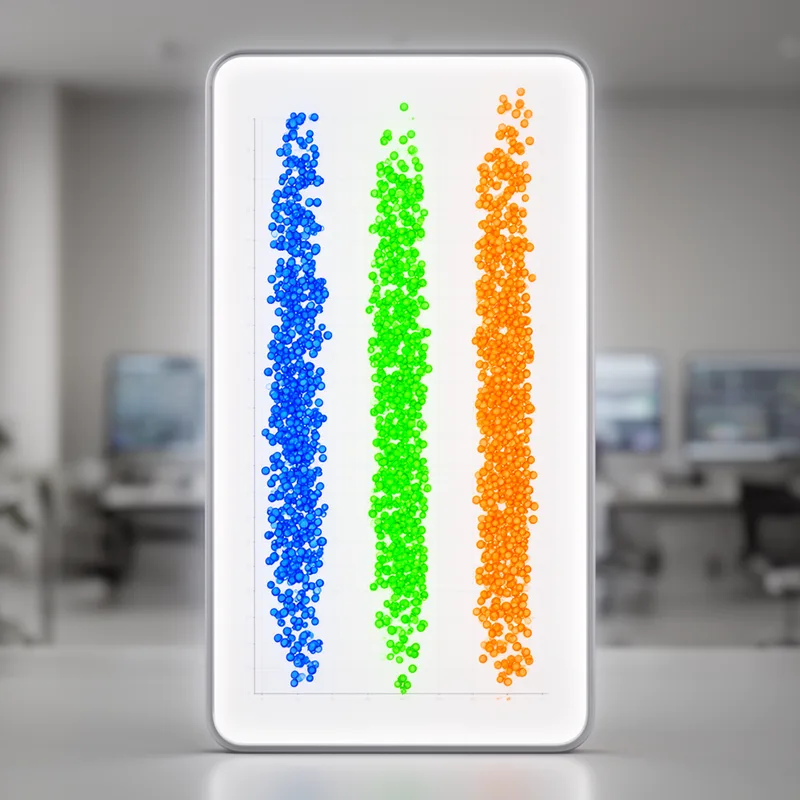
- In linear regression analysis, homoscedasticity indicates that the variance of errors is consistent across different values of the independent variable.
- assumption of homoscedasticity
- test for homoscedasticity
- normality and homoscedasticity
Examples
-
Evaluation of the assumptions of normality, linearity, and homoscedasticity was completed by examining the descriptive characteristics of the individual variables and by visual analysis of residual scatter plots.
Academic text (2008) -
Linearity, normality, and homoscedasticity are important assumptions that should be checked before a regression test is performed.
Academic text (2018) -
Preliminary analyses were performed to ensure no violation of the assumptions of normality, linearity, and homoscedasticity.
Academic text (2013) -
A review of the statistical tests for normality, homoscedasticity, independence of residuals, and multicollinearity showed the assumptions for regression were met.
Academic text (2015) -
Examinations of histograms and scatter plots indicated that the assumptions for linearity, normality, and homoscedasticity were met.
Academic text (2013) -
All assumptions for using linear regressions were met, including a normal distribution of the population as previously outlined, linear relationships between the independent and dependent variables, as well as independence, homoscedasticity, and normality of errors.
Academic text (2011) -
In all analyses, we checked that the assumptions of multiple regression were met, including homoscedasticity, normality of residuals, lack of multicollinearity, and lack of influential cases.
Academic text (2013) -
An inspection of the scatterplots and distribution of standardized residuals suggested that linearity and homoscedasticity were tenable assumptions in the present data for all regression models.
Academic text (2008) -
The assumption of linearity was confirmed using visual inspection of bivariate scatterplots, and the assumption of homoscedasticity was confirmed with visual examination of box plots (Mertler & Vannatta, 2010).
Academic text (2015) -
Statistical tests require checking homoscedasticity to ensure valid results.
Synonyms

 18
4.6
18
4.6

The state of being the same in all parts
 6
7.6
6
7.6
A state in which things are all the same throughout

The state of having parts that are all the same

The state of being the same or very similar throughout

A situation in which things are the same and do not change
How Uniform
- Specialized

- Specialized
Surface Forms
Morphology
homoscedasticity = homoscedastic (semi-transparent) = homo + scedastic + ity
The adjective 'homoscedastic' directly encodes 'same dispersion', but it relies on the specialized combining form 'scedastic' which is unfamiliar to most learners, so the immediate-base relation is partially transparent.
Etymology
Homoscedasticity comes from homo- meaning 'same' and -scedasticity from a Greek word meaning 'scatter' or 'spread', a bit like the English word 'scatter'. So, it means different groups of data have the 'same spread' of values, which is why researchers check it before using many statistical tests.