
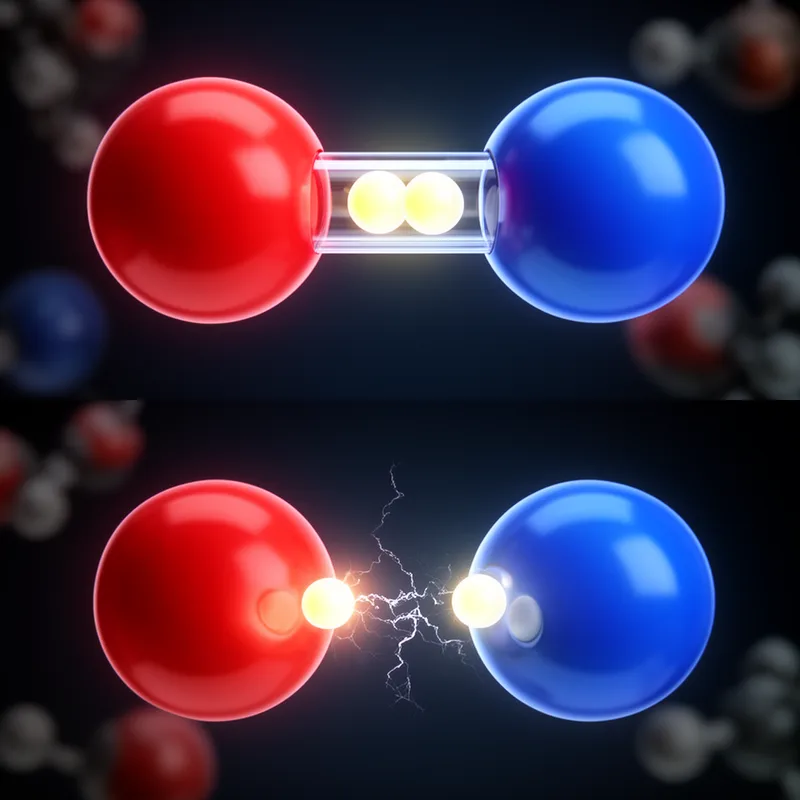
homolytic


 1
9.9
- adjective
- /ˌhoʊməˈlɪtɪk/
- Specialized
- In homolytic bond dissociation, each of the bonded atoms retains an electron, leading to the generation of two reactive species.
- homolytic O
Examples
-
From these complexes, the reaction may proceed via the two different mechanisms (homolytic and heterolytic) presented in Schemes 5 and 6, respectively.
Academic text (2001) -
When a covalent bond breaks in a homolytic manner, each atom takes one electron, resulting in the formation of two radicals.
-
The reaction involves a homolytic cleavage of the chemical bond, producing two free radicals that can initiate further reactions.
Surface Forms
Morphology
homolytic = homolysis (opaque) = homolysis + ic
Formation of an adjective from the noun 'homolysis' with the productive suffix '-ic' is a standard and recognizable morphological process.
Etymology
Homolytic comes from homo- meaning 'same', the same root as homogeneous, and -lytic from a Greek root meaning 'to break'. So a homolytic bond break is an even split where each atom keeps one electron, making two radicals.