
homoiousian
- adjective
- /ˌhoʊməˈɔɪʒən/
- Formal
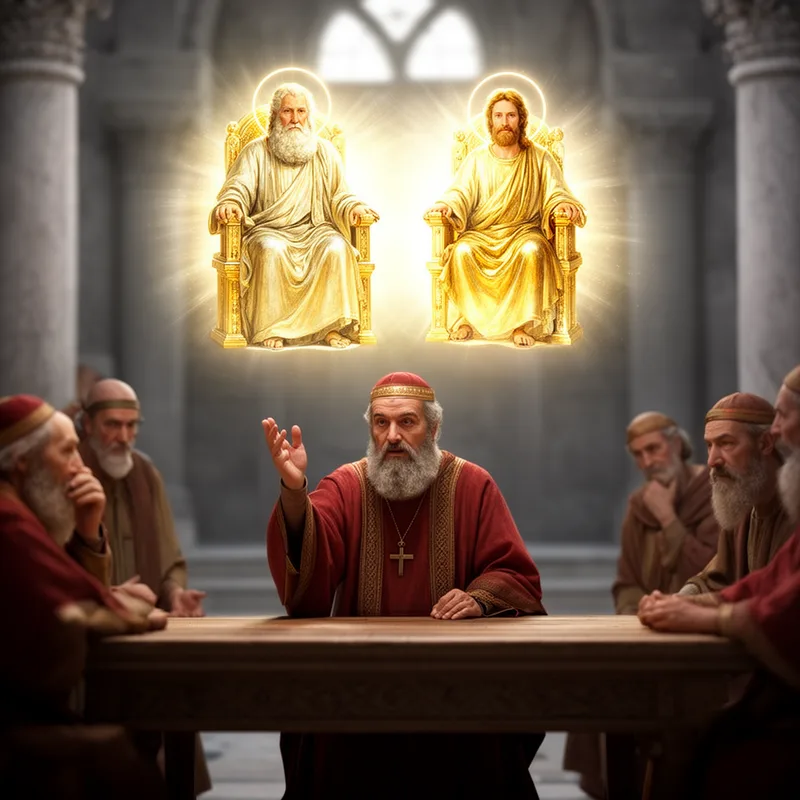
- In Christian discussions, the homoiousian view holds that the Son possesses a substance that is similar, yet distinct, from that of the Father.
Examples
-
The primary outcome of the Homoian victory in 360 was, however, primarily political, with Homoian bishops being placed in prominent sees, while their Homoiousian opponents were deposed.
Academic text (2007) -
As we will see, it is not uncommon to find Homoian and Homoiousian bishops signing the same creed.
Academic text (2007) -
The second section of the treatise is intended for the eastern Homoiousian bishops, this time commending homoousios to them as being compatible with their belief in homoiousios.
Academic text (2007) -
Although we have no formal record that he signed, the Homoiousian delegates did, under much duress, assent to the revision, despite the fact, as we have seen with Germinius, that the Homoians believed the revision rendered Homoiousian theology no longer orthodox.
Academic text (2007) -
The debate among theologians often centers on whether the term homoiousian adequately describes the nature of the Son in relation to the Father.
-
Many early church leaders identified as homoiousian, advocating for a nuanced understanding of Christ's divinity in contrast to the Father.
Surface Forms
Morphology
homoiousian = homoi + ous + ian
The word is a learned Greek theological compound (homoi- + ous- + -ian) whose parts are not productive standalone English morphemes and whose specialized meaning is not derivable by typical learners.
Etymology
Homoiousian comes from the Greek parts homoios ('similar') and ousia ('being' or 'substance'), so it literally means 'of similar substance'. That's why the adjective homoiousian describes the view that the Son is like, but not identical to, the Father.

