
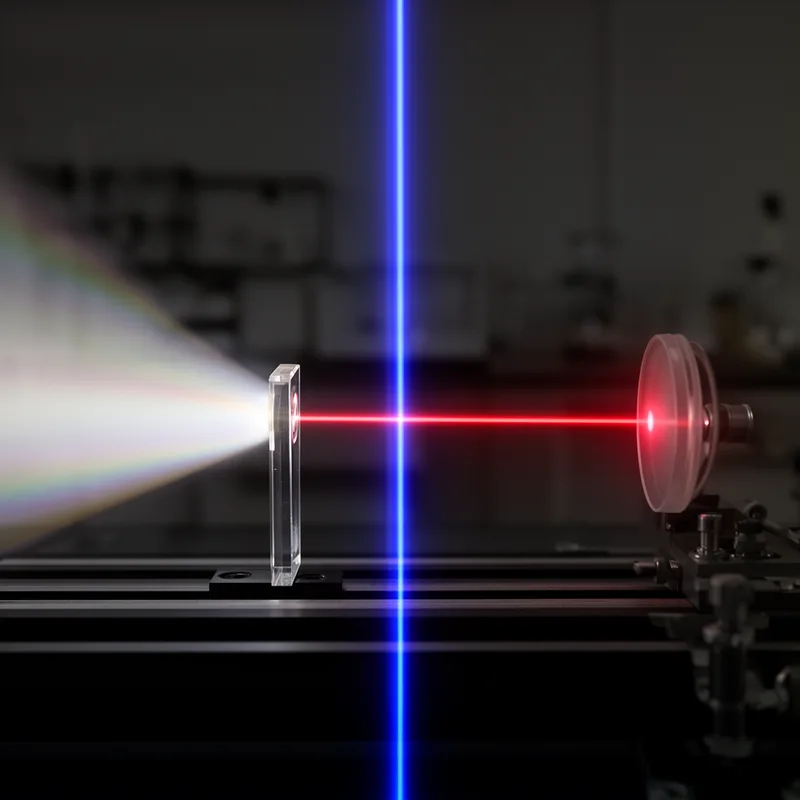
homochromatic
- adjective
- /ˌhoʊmoʊkrəˈmætɪk/
- Specialized
- A homochromatic beam is used in experiments that require precise wavelength control.
Examples
-
Only homochromatic light passed through the filter, resulting in a pure spectral color.
-
Lasers are prized for producing highly homochromatic sources of light.
-
The laser emitted a homochromatic beam of light.
-
A homochromatic light source is essential for this experiment.
-
In scientific research, a homochromatic light source is crucial for accurate measurements.
-
The experiment required a homochromatic beam to ensure consistent results across trials.
-
For color matching, using a homochromatic lamp helps achieve precise visual effects.
Synonyms

 8
7.2
8
7.2

Having only one color, or for light, only one wavelength
 2
6.1
2
6.1
Showing only one color or its different shades

A thing that uses only one color or shade

Showing only one color in lighter and darker shades

Having only one color
How Monochromatic
- Specialized

- Specialized

 1
7.5
1
7.5
Surface Forms
Morphology
Etymology
Homochromatic comes from Greek parts homo- meaning 'same' and chromatic from chroma meaning 'color', so it literally means 'same color' and is used for light that has a single wavelength or one pure color.