
homeotic


 1
9.9
1
9.9
- adjective
- /hoʊˈmiːətɪk/
- Specialized
- Genuine homologues of homeotic genes in Drosophila have been found in many vertebrates (and almost surely exist in all), including the African toad Xenopus, chickens, mice, and humans.
- homeotic genes
- homeotic complexes
Examples
-
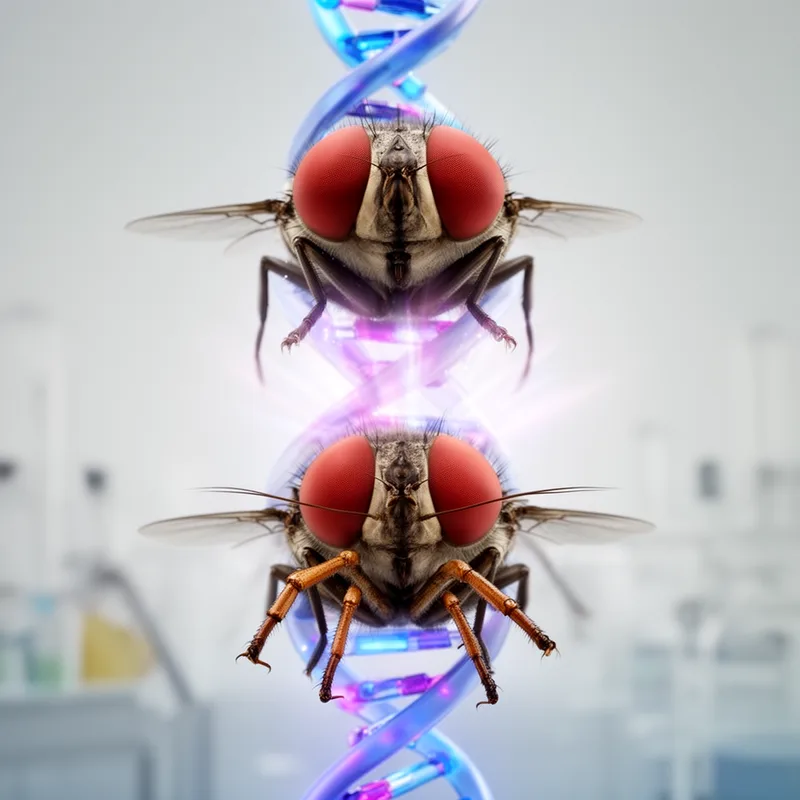
For example, mutations in certain homeotic genes in fruit flies cause the halteres (small balancing organs) to be transformed into a second pair of wings.
Blog text (28) -
But the ingenious work of many scientists (most notably Ed Lewis and colleagues at CalTech) has elucidated the genetic configuration and mode of action of the homeotic genes.
Academic text (1992) -
If we knew nothing more, homeotic mutations would still grab us for their weirdness.
Academic text (1992) -
Drosophila, by contrast, retains but a single set of homeotic genes.
Academic text (1992) -
With this scheme, we obtain an elegantly simple coordinating explanation for the anatomy of homeotic mutants.
Academic text (1992) -
Hox expression in the rhombomeres shares all the features of homeotic complexes in Drosophila.
Academic text (1992) -
Mutations in homeotic genes can lead to dramatic changes in the arrangement of body parts.
-
The study of homeotic genes helps scientists understand how organisms develop and shape their limbs.
-
Researchers have discovered that homeotic mutations in embryos can completely alter the identity of certain body segments.
Compounds
Surface Forms
Morphology
homeotic = homeosis (semi-transparent) = homeo + tic
The formation from the noun 'homeosis' plus the adjectival suffix '-tic' is a regular suffixation, but the base term and combining form 'homeo-' are technical/rare and may not be known to an average B1 learner.
Etymology
The word homeotic comes from the Greek prefix homeo-, which means 'same' or 'similar' and appears in words like homeostasis. A homeotic gene or change makes one body part become 'like' another, so the word describes how parts are given the same identity during development.