
holystone
- noun
- /ˈhoʊliˌstoʊn/
- Archaic
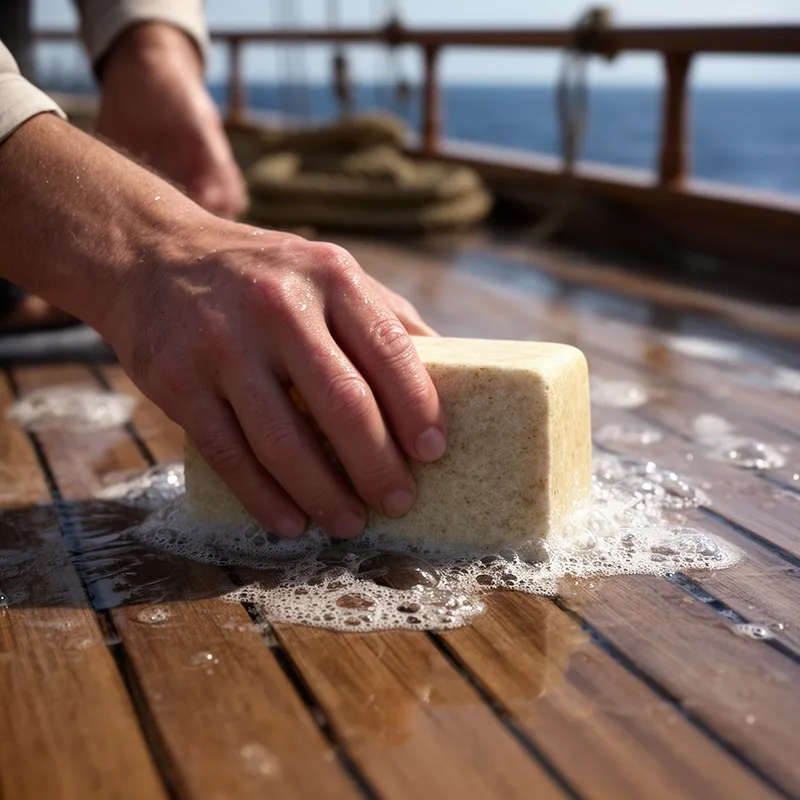
- Sailors once used a holystone to clean the wooden decks every morning.
Examples
-
The captain inspected the crew as they scrubbed the ship with holystones.
-
Every sailor should know how to use a holystone.
-
A worn holystone lay abandoned by the rail after the cleaning was done.
-
The crew used a holystone to clean the deck.
-
Sailors used a holystone to scrub the decks, ensuring they stayed clean and polished.
-
In the past, a holystone was an essential tool for maintaining the ship's wooden deck.
-
Every morning, the crew would reach for a holystone to clean the ship's deck thoroughly.
Surface Forms
Morphology
Etymology
Holystone is made from holy and stone, and a helpful way to remember it is this: sailors often knelt on the soft block as they scrubbed, like they were praying, so the stone became known as a 'holy' stone. It is a soft sandstone block used to scrub the wooden decks of ships.

