
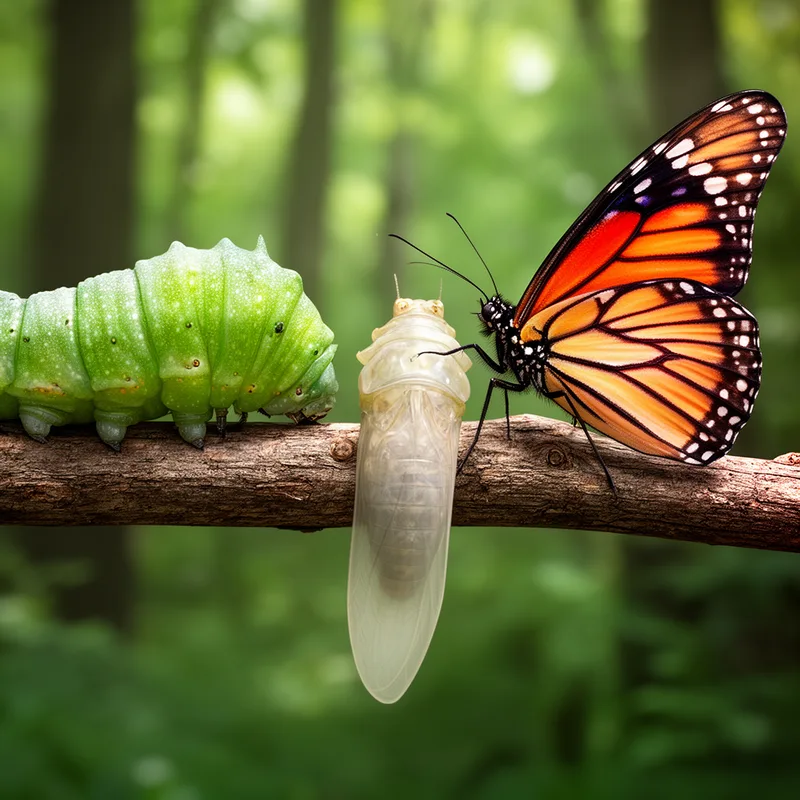
holometabola


 1
9.9
- noun
- /ˌhoʊloʊˈmɛtəˌboʊlə/
- Specialized
- Beetles and butterflies are examples of holometabola because they have distinct larval, pupal, and adult stages.
Examples
-
Scientists study holometabola to understand the evolution of insect development.
-
Flies, beetles, and butterflies are all classified as holometabola due to their complete metamorphosis.
-
Unlike grasshoppers, which are hemimetabolous, flies belong to the holometabola group.
-
The holometabola group includes butterflies and beetles.
-
Are holometabolae more diverse than other insects?
-
Beetles and butterflies are examples of holometabola because they have distinct larval, pupal, and adult stages.
-
Scientists study holometabola to understand how insects change between their larval, pupal, and adult forms.
Synonyms
Insects that change completely from egg to adult, for example a caterpillar then a pupa
Surface Forms
Morphology
holometabola = metabolism (opaque) = holo + metabola
The prefix 'holo-' means 'whole' or 'entire', but the specific biological meaning is not easily derived from 'metabolism'.
Etymology
The word holometabola comes from Greek parts holo- meaning 'whole' and metabole meaning 'change', so it literally means 'whole change'. So holometabola are insects that go through a complete change of form in their life, like a caterpillar becoming a butterfly.