

holdfast
 1
8.4
1
8.4

- noun
- /ˈhoʊldˌfæst/
- Specialized
- Storms may cause substantial mortality by tearing seahorses loose from holdfasts and casting them adrift to wash up on shore.
Examples
-
When she is ready to transfer eggs, the female releases the holdfast and stretches upward—"points"—as if to rise to the surface, keeping her tail tip on the ground.
Academic text (1990) -
The rock climber used a metal holdfast to ensure his safety on the steep cliff.
-
At frequent intervals, the pair make their way, in tight parallel formation, across the bottom to another holdfast.
Academic text (1990) -
Both then settle down on the bottom with their tails wrapped around holdfasts.
Academic text (1990) -
The tail is prehensile and so strong that seahorses often cannot be pried loose from a holdfast.
Academic text (1990) -
Both seahorses grasp the same holdfast with their tails and, using it as a pivot, begin to circle like merry-go-round horses.
Academic text (1990) -
They went through another passage, tugging themselves along by holdfasts, and came out on the naked curve of the hull.
Fiction book (1991) -
The sailor secured the boat to the dock using a strong holdfast.
-
The artist attached her canvas to the easel with a sturdy holdfast for stability.
Synonyms
 52
5.6
52
5.6
A device that holds or locks something closed
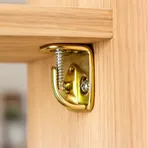 13
3.4
13
3.4
A part used to hold something in place
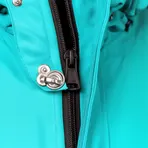 7
3.2
7
3.2
A thing that holds two parts together, like a button or zipper
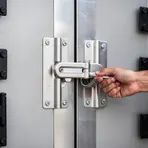 2
3.9
2
3.9
A thing that holds two parts together so they stay secure

 1
3.6
1
3.6
A tool that keeps something steady in one place
 1
4.3
1
4.3
A reason that stops progress or keeps something in place

A device or method that keeps something from moving
Antonyms


How Secure

Surface Forms
Morphology
Etymology
Holdfast is made from the simple words hold ('to keep') and fast ('firmly' or 'fixed'), so it literally means something that holds tightly in place. A helpful image is a clamp that keeps cables safe or the part of seaweed that clings to rocks, which shows why a holdfast secures things firmly.