
to historicize


 1
7.9
1
7.9
- verb
- /hɪˈstɔːrɪˌsaɪz/
- Specialized
- Features essays that historicize feminism as an intellectual and social movement.
- historicized experiences
Examples
-
Rather, it is because he historicized the medical tradition and thereby contributed to its redefinition.
Academic text (2018) -
Unlike the Chicago School's penchant for broad models, they have taken pains to contextualize and historicize their work.
Academic text (1999) -
And how do we describe and historicize the response of the viewing subject?
Academic text (1993) -
For all his theoretical demands to historicize, Giroux offers readers no historical perspective on calls like these.
Academic text (2001) -
Older, nontraditional-aged students historicized race and acknowledged a group dynamic between the races.
Academic text (2009) -
Political struggle must also be about denaturalizing or historicizing the categories that are seemingly natural and obvious.
Academic text (1993) -
Najmabadi has published a range of research relevant to sexuality based on a historicized analysis of Iranian texts.
Academic text (2005) -
Scholars and artists alike are re-appropriating, historicizing, and creating new works from the archive.
Blog text (9) -
As we work to create comparisons over time and space, it is essential that we historicize the different contexts in which immigrants and ethnics found themselves.
Academic text (1999) -
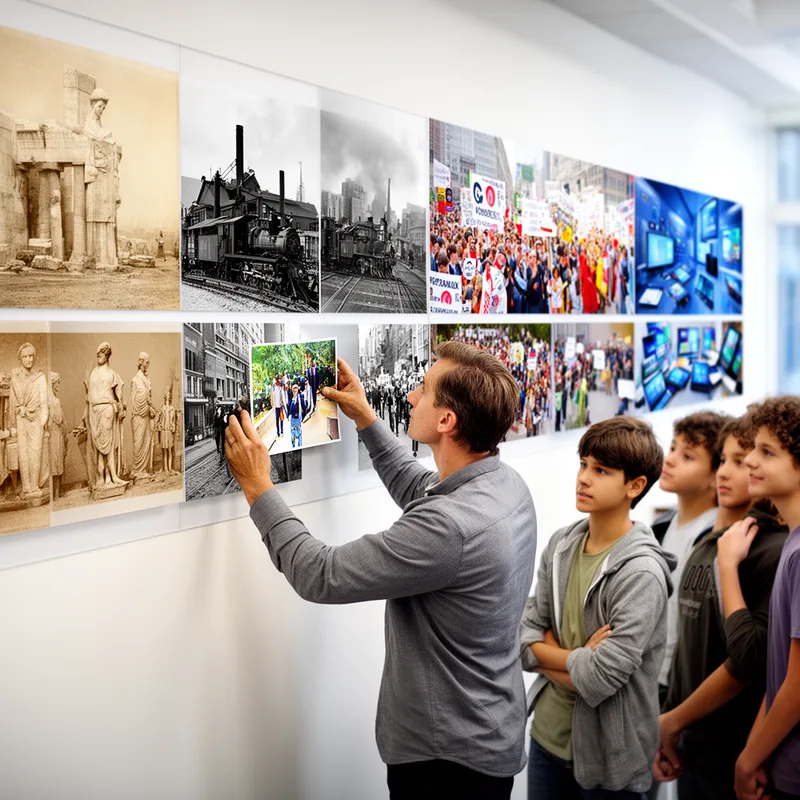
The teacher encouraged her students to historicize the events of the Civil Rights Movement to better understand their impact on today.
How Historical

Surface Forms
Morphology
Etymology
Historicize comes from history ('story of the past') plus the ending -ize ('to make' or 'to treat as'). So to historicize events or ideas is to put them into history or to treat them as part of the past so we can understand them better.