
histidine
- noun
- /ˈhɪstɪdiːn/
- Specialized
- On DNA sequencing (six affected family members), all were heterozygous for the mutation of arginine at residue 589 to histidine in the membrane domain of band 3.
Loading YouTube…
Watch on YouTubeThen we actually sever that histidine tag and we wash it through and we end up with nothing but our luciferase.
- Then we actually sever that histidine tag and we wash it through and we end up with nothing but our luciferase.
Examples
-
This difference stems from the presence of either histidine (clade 2) or tyrosine (clade 1) at position 253 in the NA protein (26, 27).
Academic text (2013) -
Each Fe-center has one histidine ligand.
Academic text (2001) -
We see basically the histidine working on this water molecule.
-
Then this strain is back to being able to synthesize histidine because it's got all the enzymes.
-
Then we actually sever that histidine tag and we wash it through and we end up with nothing but our luciferase.
-
They showed that the behavioral variability of an ensemble of cells was controlled by the slope of the histidine kinase activation curve.
Academic text (2012) -
Recombinant N protein of ZMLS/2011 was expressed in Escherichia coli and purified by histidine tag-based affinity chromatography.
Academic text (2013) -
The mutations changed a key amino acid—arginine—into one of three other amino acids: histidine, cysteine, or serine.
Academic text (2005) -
In view of these findings, it may be more appropriate to consider all clade 1 viruses possessing histidine at position 253 as hypersensitive and to use a median IC50 value of clade 2 viruses in fold difference calculations.
Academic text (2013) -
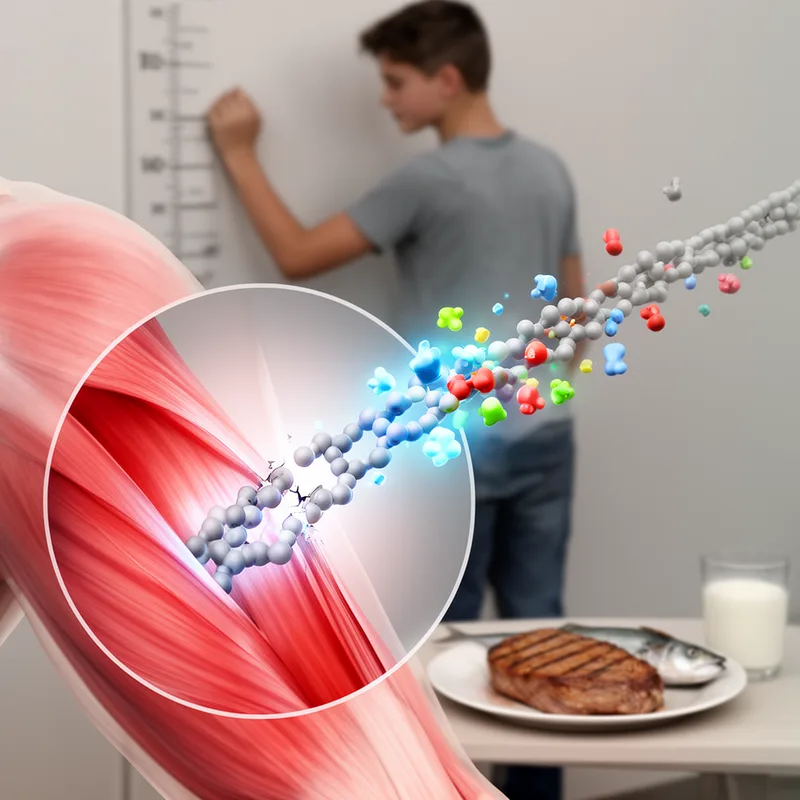
An essential amino acid, histidine is important for tissue growth and repair in the body.
Surface Forms
Morphology
histidine = histid + ine
Although analysable into the combining form 'histid-' and the chemical suffix '-ine', this is specialised chemical nomenclature and an average learner cannot derive the meaning 'an essential amino acid' from the parts.
Etymology
Histidine comes from the Greek root hist- meaning 'tissue' and the chemical ending -ine. So histidine is an amino acid found in many proteins that helps build and repair body 'tissue', which makes the name easy to remember.

