
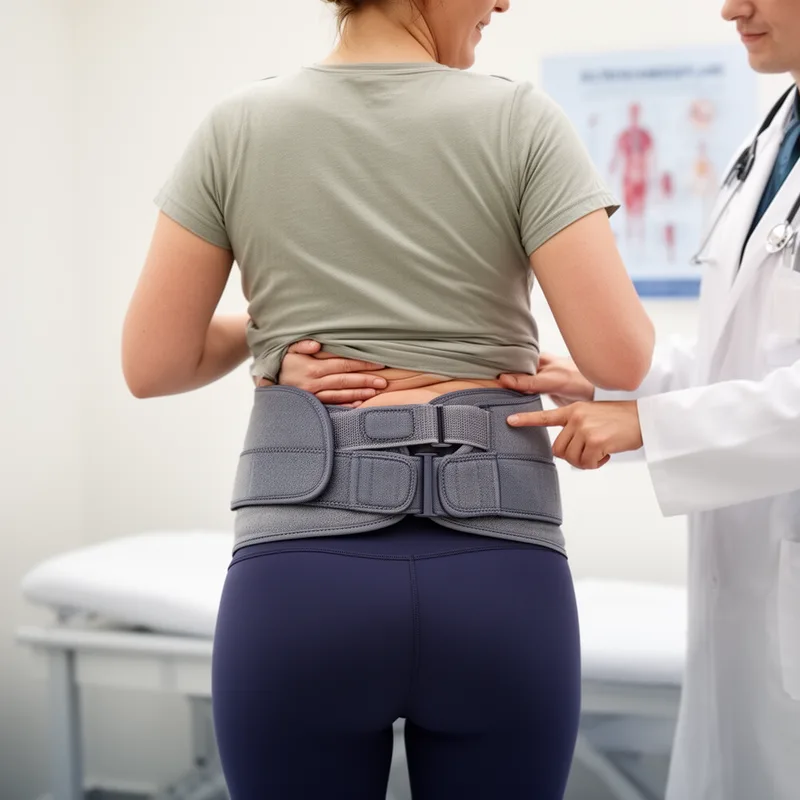
hip belt
- noun
- /hɪp bɛlt/
- Specialized
- Pregnant women sometimes use a hip belt for extra support during the later months.
Examples
-
After his injury, he found that a hip belt made walking much more comfortable.
-
She wore a hip belt during her pregnancy.
-
The doctor recommended wearing a hip belt to help with lower back pain.
-
The hip belt provides excellent support for my lower back.
-
She wore a hip belt during her pregnancy to provide extra support and relieve discomfort.
-
The doctor recommended using a hip belt to stabilize her lower back while lifting heavy objects.
-
Many athletes find that a hip belt helps them lift weights more effectively by supporting their hips and pelvis.
Synonyms

 642
1.0
642
1.0

A strip of material worn around the waist to hold up clothes

A wide band worn around the belly to support the stomach and lower back
How Supportive

Surface Forms
Morphology
The noun is transparently composed of 'hip' (the body area) + 'belt' (a strap or supportive band), so a learner who knows both words can infer it is a belt worn at the hips to support or stabilize that area. This follows regular English noun–noun compounding and is cross-linguistically common, making the meaning predictable for a B1 learner.
Etymology
Hip belt comes from the wide belt that wraps around the hips to steady the lower body. The image of a band holding the hips so movement is easier explains why it means a support band used to 'relieve' pain or help during pregnancy today.