

to hinge


 1
3.1
1
3.1
- verb
- /hɪndʒ/
- During the early 20th century, it was the practice of the Archives to unfold, flatten, repair, and hinge mount these documents in leather-bound volumes.
- hinge your wrists
- hinge forward
- hinge the door
Loading YouTube…
Watch on YouTubeThat's because the door is rear hinged, allowing you to simply glide gracefully into your Rolls Royce.
- That's because the door is rear hinged, allowing you to simply glide gracefully into your Rolls Royce.
- We teach them how to hip hinge your squat.
Examples
-
So these things hinge through the gaps, which seems to work quite well.
-
And then we have these pieces which of course hinge outwards to open a cover above them.
-
What part of the body needs to hinge the most in order to get you have to.
-
So it's a nice feature that you can hinge these up like that.
-
I must oil that hinge.
-
So this is the the white thing that hinges up from here.
-
And by that I mean when you push on this lever on the real one, it hinges, right?
-
They rotate and also hinge out to the sides.
Blog text (31) -
And it sort of hinges once, hinges again, folds around the back and clicks on the back.
-
To improve your form, hinge forward from your hips and keep your back flat.
Phrasal Verbs
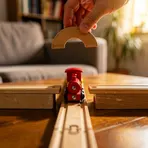

Compounds

- Specialized
1
5.6
A metal joint set into the edge of a door and its frame to let the door open
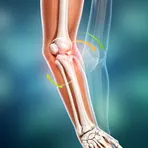
- Specialized
1
4.3
A joint that lets a body part move mainly in one direction like a knee or elbow
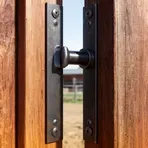

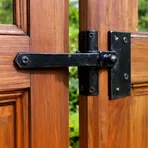
- Specialized
A metal T shaped plate that joins a door or gate to its frame and lets it open

How Secure

Surface Forms
Etymology
Hinge as a verb comes from the same root as hang, meaning 'to hang'. To hinge something is to attach it so it can hang and swing on a joint.