
hindbrain
 1
8.2

- noun
- /ˈhaɪndˌbreɪn/
- Specialized
- The midbrain, hindbrain, spinal cord, and forebrain form the central nervous system.
- midbrain and hindbrain
- forebrain and hindbrain
Examples
-
The brain has the forebrain, where conscious thinking is conscious thinking, and the hindbrain, which is like habit and reflex behavior.
-
The nervous system progresses from a neural tube to the essential subdivisions of the brain into forebrain, midbrain, and hindbrain. During this time, the upper and lower limb buds also begin to appear.
Academic text (1990) -
OK, so the embryonic spinal cord and hindbrain have a very close relationship.
-
The female hindbrain is shaped for survival in a scarce resource environment.
Blog text (22) -
The primitive vertebrate brain is tripartite, consisting of the forebrain, midbrain, and hindbrain.
Academic text (2003) -
The brain is made up of three main sections: the forebrain, the midbrain, and the hindbrain.
-
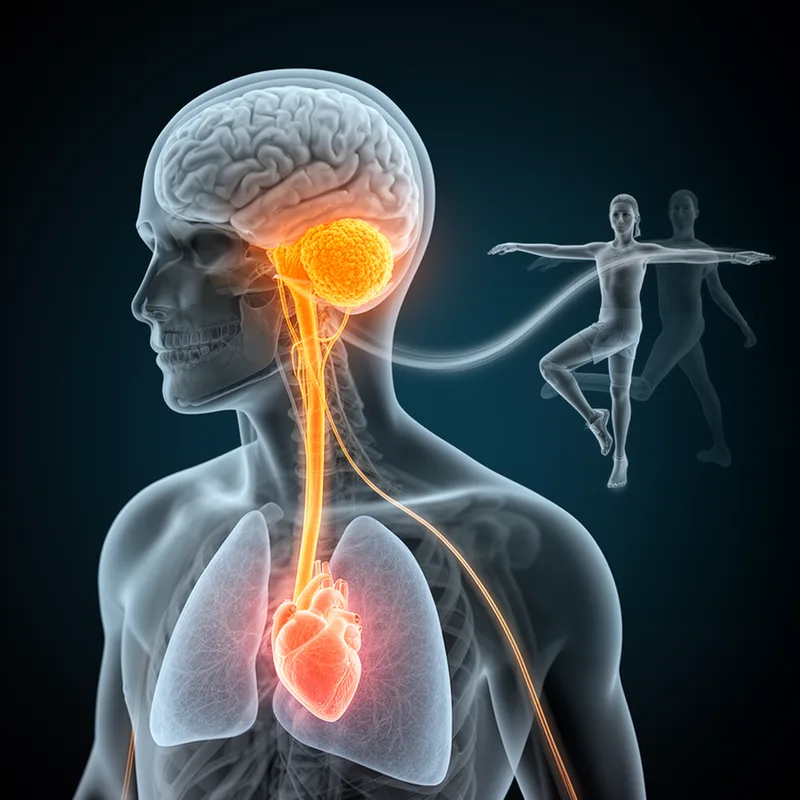
The medulla is in the hindbrain and controls heartbeats, breathing, and other functions.
-
The midbrain, hindbrain, spinal cord, and forebrain form the central nervous system.
Synonyms

The back part of the brain that controls balance, movement and breathing
Surface Forms
Morphology
Etymology
Hindbrain comes from the words hind and brain, where hind means 'back', as in a 'hind leg'. So the hindbrain is the part of the brain at the back of the head that controls balance and basic body functions.