
hijra


 1
9.7
- noun
- /ˈhɪdʒrə/
- Historians note that the Hijra was crucial for the establishment of the Muslim community in Medina.
Examples
-
We pray to God, praise and glory be to Him, to make our hijra a hijra in His cause.
Academic text (2005) -
We are in a situation of no longer having a country to which to make Hijra.
Academic text (2005) -
Unfortunately, the concept of Hijra is not limited in time or space to 7th century Arabia.
Blog text (13) -
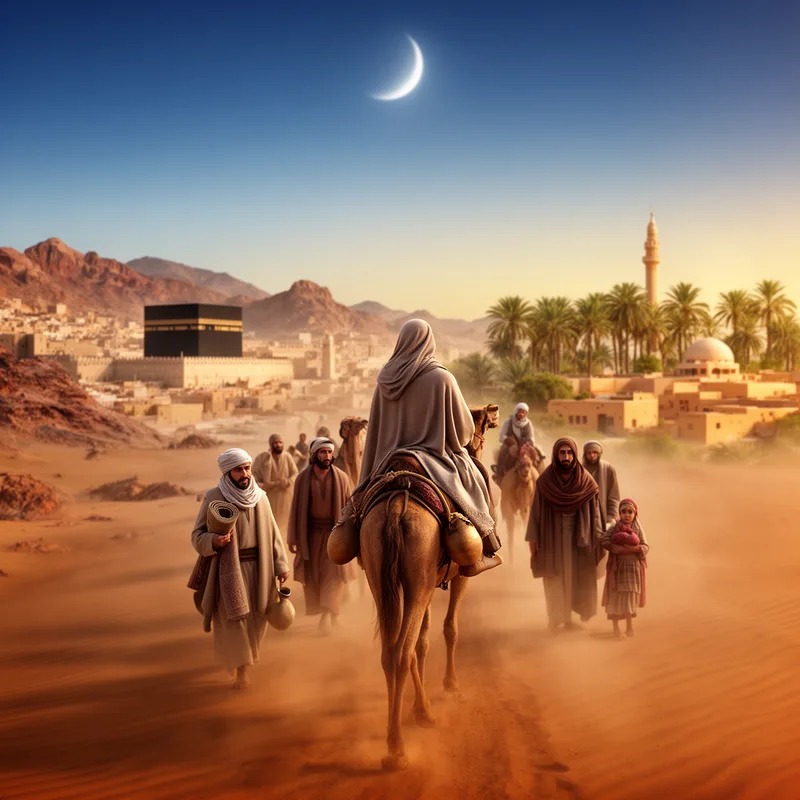
The original hijra refers to the events of A.D. 622, when the Prophet Muhammad and the earliest Muslims slipped out of hostile Mecca and sought refuge in Yathrib, later renamed "Medina."
Academic text (2005) -
The Hijra marks the moment when Muhammad and his followers left Mecca for Medina in 622 CE.
-
In Islamic tradition, the Hijra is considered the beginning of the Islamic calendar.
Synonyms
 1
9.9
A journey by Muhammad from Mecca to Medina in 622 that marks the start of the Muslim calendar

The journey of Muhammad from Mecca to Medina in 622 that starts the Islamic calendar
Surface Forms
Etymology
Hijra comes from the Arabic word hijra, meaning 'migration' or 'to leave'. It names the Prophet Muhammad's move from Mecca to Medina, and so the year of the hijra is the start of the Islamic calendar.