

to hibernate
 19
4.6
19
4.6

- verb
- /ˈhaɪbərˌneɪt/
- But I will wake up again in the spring. "Why do you have to hibernate?" Small Mouse asked.
- bears hibernate
- hibernating animals
- hibernate during the winter
Loading YouTube…
Watch on YouTubeBut this is it's a fine idea in science fiction, but it goes way back because we observe bears hibernate.
- But this is it's a fine idea in science fiction, but it goes way back because we observe bears hibernate.
- And then as they as they hibernate, that energy, that food is being sort of gradually consumed, right?
Examples
-
Cough loudly in a cave full of hibernating bats, and they will start to rouse.
Academic text (2007) -
Humans don't hibernate, but bears do in ways that we might one day emulate.
-
What say we go and hibernate, eh?
-
And not only that, but hamsters hibernate for about two months.
-
Most puzzling among them are several species that hibernate even when the weather is warm.
Academic text (2000) -
In some, both sexes hibernate, while in others, only the female takes time out.
Academic text (2000) -
Animals can hibernate for months at a time from in squirrels to big old bears.
-
Because snapping turtles and musk turtles burrow and hibernate, algal infestation is slower on these genera.
Academic text (1992) -
Many animals, including bears, hibernate during the winter months to conserve energy.
-
The groundhog is known to hibernate in its burrow until spring arrives.
Synonyms
 1
7.3
1
7.3
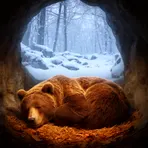
An animal taking shelter in a safe place to sleep through winter
Antonyms

How Dormant

Surface Forms
Morphology
hibernate = hibern + ate
The combining form 'hibern-' (winter) is not a standalone English word and the verb is not transparently built from any common English base that learners know.
Etymology
Hibernate comes from the Latin verb hibernare, which means 'to spend the winter'. So when animals hibernate, they go into a very quiet, low-energy state to survive the cold and lack of food.