
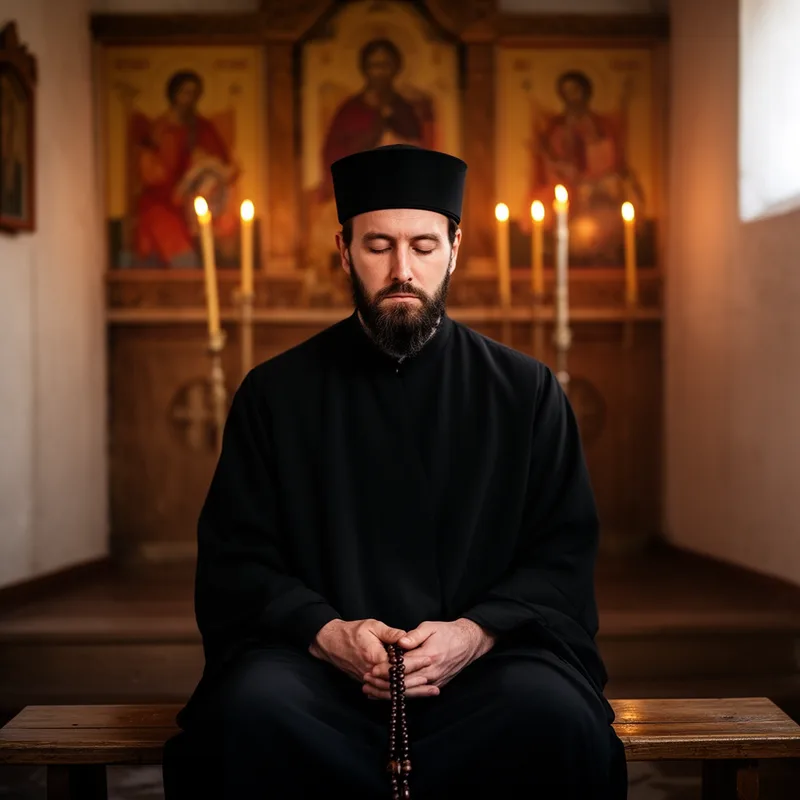
hesychasm


 1
9.9
- noun
- /ˈhɛzɪˌkæzəm/
- Specialized
- The most significant phenomenological expression of Eastern Orthodox mystical theology that has some parallels with Hindu and Buddhist practices is Hesychasm.
- Hesychasm and Zen
Examples
-
The dominant figure of Hesychasm is St. Gregory Palamas, Archbishop of Thessaloniki.
Academic text (2015) -
Many practitioners of Eastern Orthodox Christianity find solace in the contemplative practices of hesychasm.
-
Their views seem phenomenologically to be similar to Hesychasm, yet they are completely different.
Academic text (2015) -
In Hesychasm, we find certain phenomenological parallels.
Academic text (2015) -
We do not need a more careful understanding of the nous, the passions, and hesychasm.
Blog text (13) -
The common characteristics of the breathing exercises in Hesychasm and Zen make the study of these common religious phenomena interesting.
Academic text (2015) -
This was not experienced by all, but it seems that the hesychasts did not condemn the rest of the monks or people who did not practice "Hesychasm."
Academic text (2015) -
My intention here is to present the religious phenomena of Zen and Hesychasm, analyzing similarities within the mechanism of prayer and movements within the respective faiths.
Academic text (2015) -
There is a common way that the transcendent light is exposed in Zen Buddhism and Hesychasm, but at the same time there is conflict between traditional Eastern Christian ideas on communion with God and the Western approaches to God that are manifest in the Eastern and Western understanding of God.
Academic text (2015) -
The tradition of hesychasm involves deep meditation that leads to inner stillness and spiritual peace.
Synonyms
 1
9.9
A religious belief that people should withdraw from the world and quietly seek God
Surface Forms
Etymology
Hesychasm comes from the Greek word hesychia, meaning 'quiet' or 'stillness'. It refers to a religious practice of silent, repeated prayer and inner calm, so the origin shows why the word means a tradition of inner quiet.