
heshima
- noun
- South African
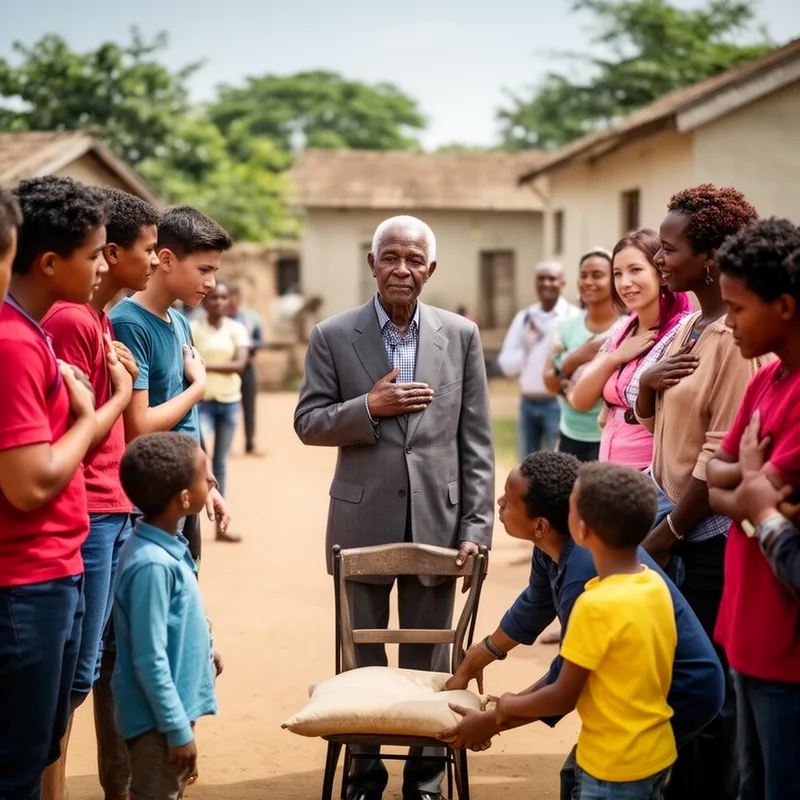
- In many cultures, showing heshima to elders is a sign of respect and honor.
- former slave, gaining heshima
- status and heshima
- people access heshima
Examples
-
If you did not have heshima, then people would be less likely to help you when you needed it.
Academic text (2006) -
If someone was viewed as "lazy," they would have less heshima than a hard worker.
Academic text (2006) -
Wealth allowed a person to access heshima through Islamic education and charity.
Academic text (2006) -
"Needless to say, shifting identity meant having heshima, which gave people membership in a local community."
Academic text (2006) -
Nonetheless, the concept of heshima was important enough that it was recognized early in the Protectorate period.
Academic text (2006) -
Former slaves were able to use the attainment of heshima as a means to integrate into the free community.
Academic text (2006) -
The same situation pertained in rural Pemba, where heshima was a critical factor in communal participation.
Academic text (2006) -
For example, Middleton argued that on Lamu, men accessed heshima through "scholarship, business integrity and skill, and piety."
Academic text (2006) -
In Frederick Johnson's 1939 dictionary, heshima was defined as "honour, dignity, position, rank, respect, reverence, modesty, and courtesy."
Academic text (2006) -
Achieving heshima in the community often requires hard work and dedication.
Synonyms

 ∞
2.2
∞
2.2

Respect given to a person for good moral behavior
 19
4.6
19
4.6
Being seen by other people as proper and having a good name
 4
7.8
4
7.8
Strong respect for someone or something, often shown in a religious way
 2
4.3
2
4.3
A respected place in a group because people admire you

Being worthy of deep respect and honour
How Respected

Surface Forms
Etymology
Heshima is a Swahili noun meaning 'respect' or 'honor' and often describes the good name or reputation someone has in their community. So to have heshima is to be respected and treated with honor by others.