
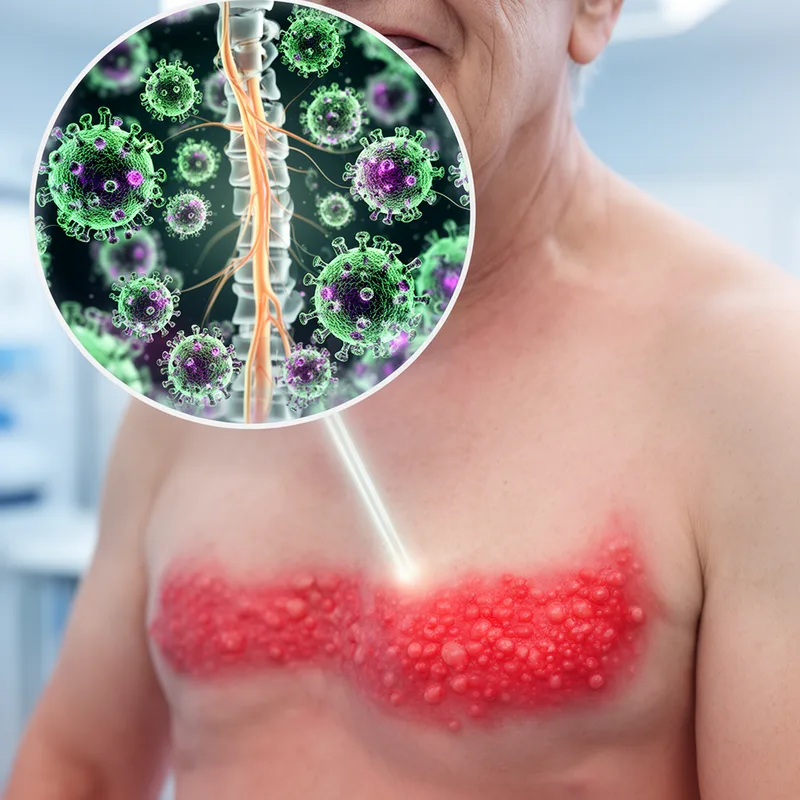
herpes zoster virus
- noun
- /ˈhɜrpiːz ˈzɒstər ˈvaɪrəs/
- Specialized
- After recovering from chickenpox, the herpes zoster virus can remain dormant in the body for years.
Examples
-
Researchers are developing vaccines to protect against the herpes zoster virus in older adults.
-
The herpes zoster virus can reactivate later in life.
-
The reactivation of the herpes zoster virus can cause a painful rash known as shingles.
-
Many people develop symptoms of the herpes zoster virus as they age.
-
The doctor explained that the herpes zoster virus can reactivate after a person has had chickenpox.
-
After experiencing intense pain, she learned that she had contracted the herpes zoster virus.
-
Treatment options for a rash caused by the herpes zoster virus include antiviral medications and pain relievers.
Synonyms


 1
4.9
1
4.9
A germ that causes chickenpox and shingles in people

A virus that causes chickenpox and shingles in people

A virus that causes chickenpox and later shingles

A virus that causes a painful skin rash with blisters
Surface Forms
Morphology
The term literally names the virus associated with the herpes zoster infection: combining 'herpes' and 'zoster' with 'virus' straightforwardly indicates the virus that causes that condition. Although somewhat technical, the meaning is compositionally derived from the constituents and follows common biomedical naming patterns (e.g., varicella‑zoster virus), so a learner who knows the parts can infer the meaning.
Etymology
Herpes zoster virus comes from old Greek words: herpes meaning 'to creep' and zoster meaning 'belt'. Doctors used these words because the virus makes a painful rash that often appears as a belt across the body and seems to creep along the skin, so the name links to the rash we call 'shingles'.