
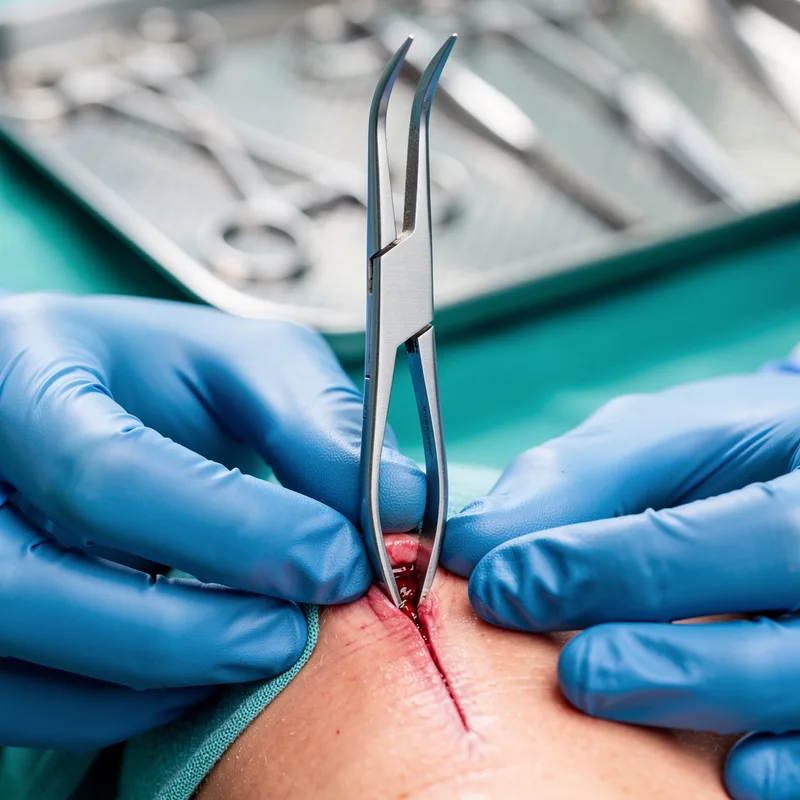
hemostat
 2
7.4

- noun
- /ˈhiːməˌstæt/
- Specialized
- The nurse quickly handed the doctor a hemostat as he struggled to stop the patient's bleeding.
Examples
-
During the surgery, the surgeon used a hemostat to control the bleeding from the severed blood vessels.
-
A simple roll of tape, a box of intravenous tubing, additional linens, scissors, hemostats, or a simple package of dressings could be the difference between life and death for either you, the inmate, or other staff members.
Academic text (2007) -
The patient was taken to the operating room where, under general anesthesia, the nail was grasped with a large hemostat and removed.
Academic text (2002) -
The scrub nurse assisted, sponging up blood and handing him hemostats.
Fiction book (1998) -
The mucosa on either side of the uvula is clamped with hemostats and then incised in an oblique direction.
Academic text (1999) -
To manage the surgical site, the surgeon clamped the blood vessels with a hemostat before proceeding with the operation.
Synonyms
 28
7.5
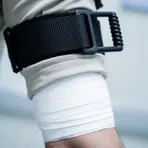
A tight band placed high on an arm or leg to stop heavy bleeding
 16
7.6
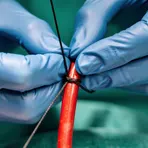
A piece of thread or thin wire that surgeons use to tie blood vessels during surgery
Surface Forms
Morphology
hemostat = hemo + stat
The elements 'hemo-' and '-stat' are technical medical combining forms not familiar to an average B1 learner, so the meaning 'instrument to stop bleeding' is not transparently derived from everyday words.
Etymology
Hemostat comes from Greek parts hemo- meaning 'blood' and -stat meaning 'to stop' or 'stand still', so it is a surgical tool used to stop bleeding.