
hemodynamically
 1
7.9

- adverb
- /ˌhiːmoʊdaɪˈnæmɪkli/
- Specialized
- b. is hemodynamically unstable.
- hemodynamically stable
- hemodynamically unstable
Examples
-
The patient was not in distress and was hemodynamically stable.
Academic text (2004) -
This issue is critical because many patients with persistent pulmonary hypertension present with asphyxia and are hemodynamically unstable after birth.
Academic text (2002) -
Internal fixation has become the treatment of choice for treating patients after they become more hemodynamically stable.
Academic text (2006) -
At this point, the patient was hemodynamically stable and showed no signs of overt sepsis.
Academic text (2004) -
These anomalies are hemodynamically divided into high- and low-flow lesions.
Academic text (1998) -
She was hemodynamically stable.
Academic text (2007) -
Since many trauma patients are unconscious, intubated, and hemodynamically and neurologically unstable, it may be a few days before clearing can be done.
Academic text (2002) -
Emergency operations also contribute to postoperative morbidity because the patients who undergo emergency operations are hemodynamically unstable and require longer ventilatory support.
Academic text (2007) -
This term is inaccurate because these hemodynamically low-flow malformations, which develop in the venous side of the vascular tree, fail to demonstrate any angioneogenesis in cell culture, as do true hemangiomas.
Academic text (1998) -
The doctor confirmed that the patient was hemodynamically stable before transferring him to the recovery room.
Surface Forms
Morphology
hemodynamically = hemodynamic (semi-transparent) = hemo + dynamic + al + ly
The adverbial form is a standard derivation from the adjective 'hemodynamic'.
Etymology
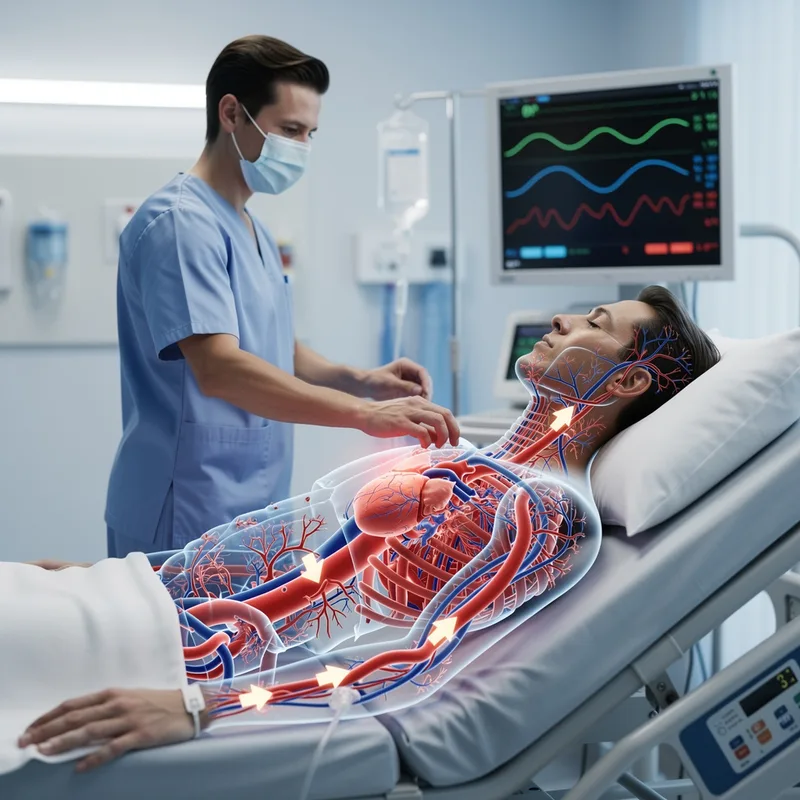
Hemodynamically comes from the parts hemo- meaning 'blood' and dynamic meaning 'movement' or 'energy'. So when doctors monitor someone hemodynamically, they are checking how the blood moves and flows in the body.