
hemocyanin


 1
9.6
- noun
- /ˌhiːmoʊˈsaɪənɪn/
- Specialized
- Scientists study hemocyanin in mollusks because it serves a similar function to hemoglobin in vertebrates.
Examples
-
Hemocyanin is not as efficient as hemoglobin at delivering oxygen to tissues.
Blog text (7) -
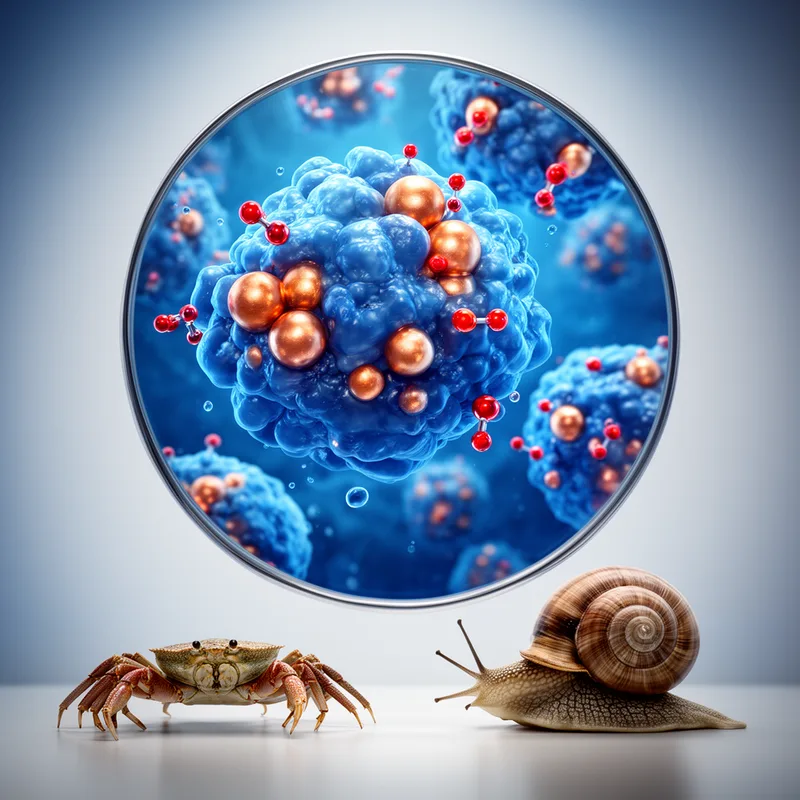
The keyhole limpet's hemocyanin gives its blood a distinctive blue color, indicating the presence of copper.
-
In some species, the blue color of the blood is due to the presence of hemocyanin, a copper-containing protein.
Surface Forms
Morphology
hemocyanin = cyanin (semi-transparent) = hemo + cyan + in
The elements 'hemo-' (blood) and 'cyan' (blue) transparently point to 'blue blood', but '-in' as a protein-forming suffix and the specialized term 'cyanin' are technical and may be unknown to many learners.
Etymology
Hemocyanin comes from the parts hemo- meaning 'blood' and cyanin meaning 'blue', the same root as the color cyan. So, like hemoglobin in humans, hemocyanin is a blood protein that carries oxygen but is blue because it uses copper.