
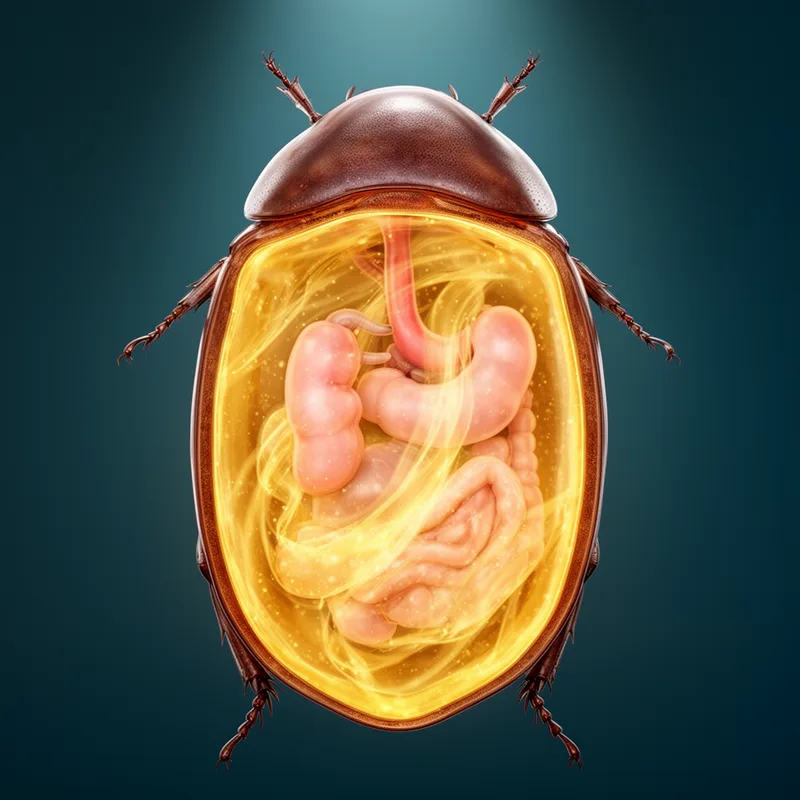
hemocoel
- noun
- /ˈhiːməˌkoʊl/
- Specialized
 :
hemocelo
:
hemocelo
- The hemocoel fills with hemolymph, which bathes the internal organs directly.
Examples
-
Unlike vertebrates, spiders have a large hemocoel instead of closed blood vessels.
-
The hemocoel allows nutrients to circulate freely throughout the insect's body.
-
The hemocoel is essential for the circulation of nutrients.
-
Insects have a large hemocoel that accommodates their organs.
-
In arthropods, the hemocoel is crucial as it facilitates the circulation of nutrients and waste products throughout the body.
-
The hemocoel serves as a large cavity where the circulatory fluid bathes the organs in many invertebrates.
-
Research has shown that the hemocoel is significantly different from a true coelom found in other animals.
Surface Forms
Morphology
hemocoel = hemo + coel
The parts are Greek combining forms ('hemo-' = blood, 'coel-' = hollow/cavity) used in specialized biological terminology and are not recognizable productive English words for an average B1 learner.
Etymology
Hemocoel comes from Greek parts haima ('blood') and koilos ('hollow'), so it literally means a 'blood hollow' where fluid can flow around the organs. That's why in insects and spiders the hemocoel is the main body space where their blood-like fluid surrounds and feeds the organs.

