

hemimetabolism
- noun
- /ˌhɛmɪˈtɛməˌbɪlɪzəm/
- Specialized
- Mayflies are classic examples of insects that exhibit hemimetabolism.
Examples
-
The distinction between hemimetabolism and holometabolism is central to insect classification.
-
Grasshoppers undergo hemimetabolism, developing through nymph stages without forming a pupal stage.
-
The life cycle of a grasshopper is an example of hemimetabolism.
-
Insects like cockroaches undergo hemimetabolism instead of complete metamorphosis.
-
In hemimetabolism, young insects called nymphs closely resemble adults but do not have wings.
-
Grasshoppers undergo hemimetabolism, where they grow progressively without a complete metamorphosis.
-
The concept of hemimetabolism is essential to understanding how certain insects develop throughout their life cycle.
Synonyms
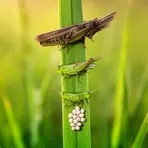
A way some insects grow, like grasshoppers, where young look like adults but lack wings and adult sex organs

Insects develop through nymph stages that look like small adults and there is no pupa
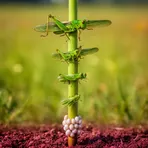
Development in some insects where young change into adults without a pupal stage like a chrysalis

A way some insects grow where young look like small adults and there is no pupa
How Complete
- Specialized

- Specialized
Surface Forms
Morphology
hemimetabolism = metabolism (semi-transparent) = hemi + metabol + ism
The prefix 'hemi-' (half) plus 'metabolism' suggests a partial or incomplete process, but the technical meaning of 'hemimetabolism' is not fully guessable from its parts for most learners.
Etymology
The word hemimetabolism starts with hemi- meaning 'half', as in hemisphere, and links to the idea of 'change' found in metamorphosis. So it literally means a 'half change'—insects with hemimetabolism grow in small steps: their young look like adults but get wings and full adult features only at the last molt.

