

hedge violet
- noun
- UK
- The hedge violet adds a splash of purple to woodland paths in early spring.
Examples
-
Gardeners often admire the delicate appearance of the hedge violet in shaded areas.
-
Clusters of hedge violets thrive along the hedgerows bordering the old estate.
-
I found a beautiful hedge violet in the garden.
-
The hedge violets bloom in early spring.
-
Clusters of hedge violets thrive along the hedgerows bordering the old estate.
-
Gardeners often admire the delicate appearance of the hedge violet in shaded areas.
-
The hedge violet adds a splash of purple to woodland paths in early spring.
Synonyms
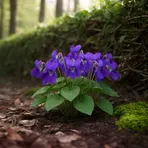
Small wild violet that grows in woods and hedges with heart-shaped leaves and purple flowers
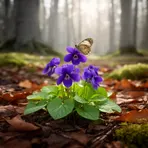
A small purple wild violet that grows in European woods
Surface Forms
Morphology
The noun phrase 'hedge violet' is transparently compositional: it denotes a violet (the flower) associated with or growing in hedges, directly derivable from 'hedge' (a row of shrubs) + 'violet' (a small perennial plant). This kind of modifier+noun combination is common cross-linguistically and would be readily understood by a B1 learner who knows both constituent words.
Etymology
Hedge violet comes from the simple image of a small purple flower, the violet, growing in hedges and at the edges of woods. Because people often saw the violet there, the name came to mean 'a common European violet that grows in woods and hedgerows'.

