
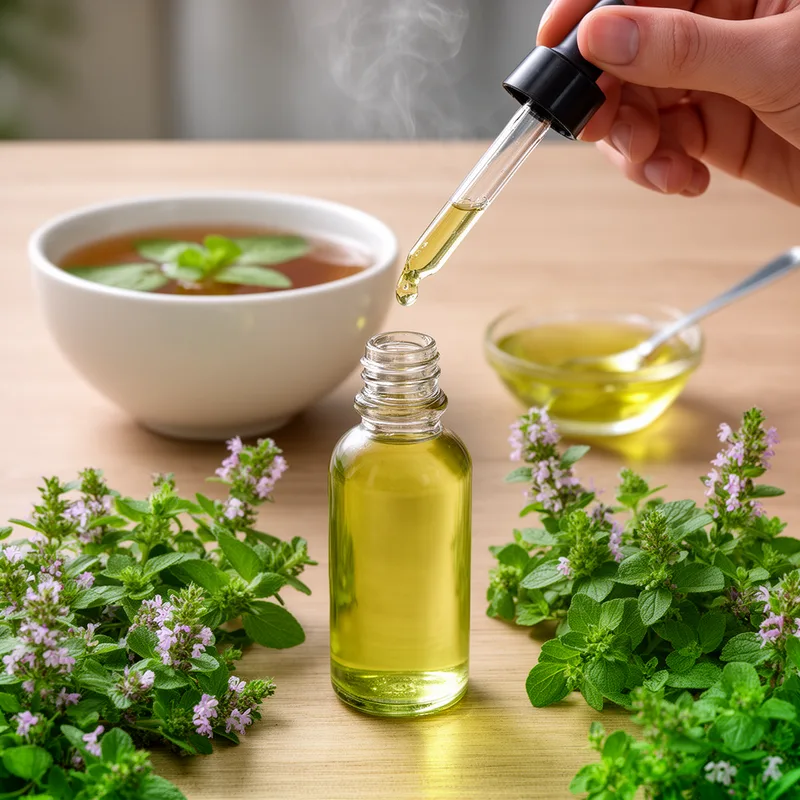
hedeoma oil
- noun
- /ˈhɛdiˌoʊmə ɔɪl/
- Specialized
- Some traditional remedies include hedeoma oil as an ingredient for treating minor ailments.
Examples
-
The herbalist recommended using a small amount of hedeoma oil for its calming effects.
-
I love using hedeoma oil in my cooking.
-
Researchers studied the chemical properties of hedeoma oil extracted from wild plants.
-
Have you ever tried hedeoma oil for headaches?
-
Some traditional remedies include hedeoma oil as an ingredient for treating minor ailments.
-
The herbalist recommended using a small amount of hedeoma oil for its calming effects.
-
Researchers studied the chemical properties of hedeoma oil extracted from wild plants.
Synonyms

An oil from the pennyroyal plant that gives a minty scent and is used in remedies but can be poisonous
Surface Forms
Morphology
The meaning is directly compositional: 'Hedeoma' names an aromatic herb and 'oil' denotes a plant-derived extract, so 'hedeoma oil' straightforwardly means oil obtained from the Hedeoma plant. This plant-name + oil pattern is cross-linguistically common and follows regular noun-noun compounding, so a B1 learner who knows both constituents would understand the MWE.
Etymology
The noun hedeoma oil comes from a small, mint-like plant called hedeoma, also known as American pennyroyal, whose leaves were pressed to make a strong, scented oil. That's why hedeoma oil means a plant oil used for 'flavorings' and 'herbal remedies'.

