
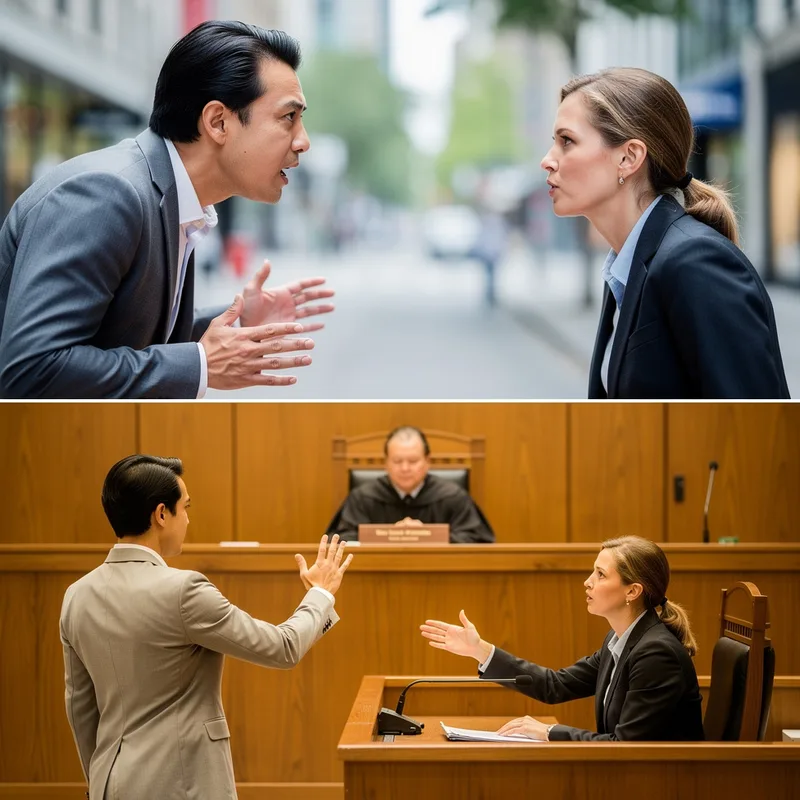
hearsay evidence
 3
8.1
3
8.1

- noun
- /ˈhɪrˌseɪ ˈɛvɪdəns/
- Specialized
- I don't like to try people by hearsay evidence.
- hearsay evidence is admissible
- admit hearsay evidence
- rule against hearsay evidence
Examples
-
A probation violation hearing isn't tantamount to a trial—hearsay evidence, for example, is admissible—but there are still some due process requirements.
Blog text (11) -
The judge explained to the jury that hearsay evidence is often unreliable and usually inadmissible.
-
Marshal, this court is not concerned with hearsay evidence.
-
This disclosure had no evidence on which to base it apart from the hearsay evidence from a victim.
Blog text (22) -
No American court admits hearsay evidence, except under special, unusual, and limited circumstances.
Academic text (1993) -
Hearsay evidence continues to be permitted, so long as it is relevant, material, and reliable.
Academic text (2017) -
Hearsay evidence is not admissible.
-
Informal discussions are allowed, and limited amounts of hearsay evidence may be admissible.
Academic text (1993) -
Hearsay evidence is more easily admissible in proceedings before ALJs than in court.
Academic text (2017) -
The lawyer argued that the hearsay evidence should not be considered during the trial.
Synonyms
 38
7.7
38
7.7
Information from other people rather than from direct experience
Antonyms

- Specialized
18
3.2
Proof that clearly shows a fact is true, such as an eyewitness report
Surface Forms
Morphology
The phrase is directly compositional: 'hearsay' means secondhand or not firsthand information and 'evidence' means material used to prove something, so together they mean evidence based on what someone else said. While the legal nuance about admissibility may be specialized, the core meaning is predictable from the constituents and is cross-linguistically transparent.
Etymology
Hearsay evidence comes from the simple idea of someone who hears what another person says and then repeats it in court, like the 'telephone' game where a story can change as it is passed on. Because the witness did not see or know it themselves, this second-hand report is often 'not allowed as proof' in court.