
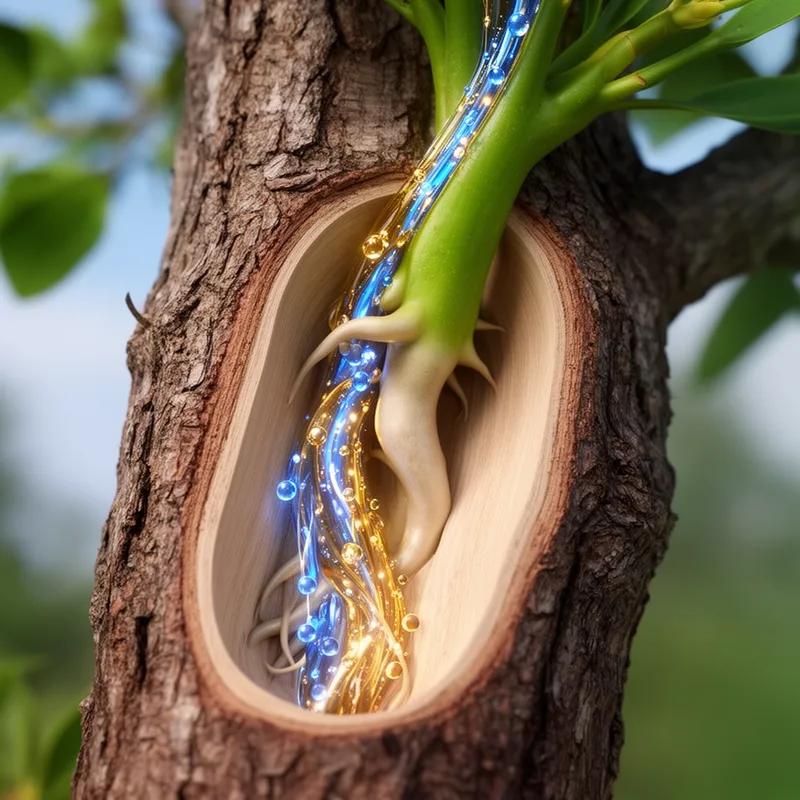
haustorium


 1
9.9
- noun
- /hɔːˈstɔːriəm/
- Specialized
- Researchers studied the formation of the haustorium in various species of parasitic plants.
Examples
-
Without a functioning haustorium, the parasite would not be able to survive on its host.
-
The mistletoe sends a haustorium into the branch of its host tree to extract water and nutrients.
-
The haustorium of the dodder plant attaches itself to the host.
-
Many parasitic plants develop a haustorium to extract nutrients.
-
The haustorium of the dodder plant attaches to its host, allowing it to extract essential nutrients from the surrounding tissue.
-
In many parasitic plants, the haustorium serves as a vital organ that connects them to the host's vascular system for nutrient absorption.
-
The fungal haustorium forms a bridge between the fungus and the plant, facilitating the transfer of nutrients essential for growth.
Surface Forms
Morphology
haustorium = haust + orium
A specialized scientific formation from the Latin combining form 'haust-' and the suffix '-orium'; these elements are not productive or familiar to average learners, so the meaning cannot be reliably derived from the parts.
Etymology
Haustorium comes from the Latin root haust- meaning 'to draw' or 'to drink', the same root you see in exhaust. A haustorium is the part of a parasitic plant or fungus that draws water and nutrients from its host, so the name fits its job.