
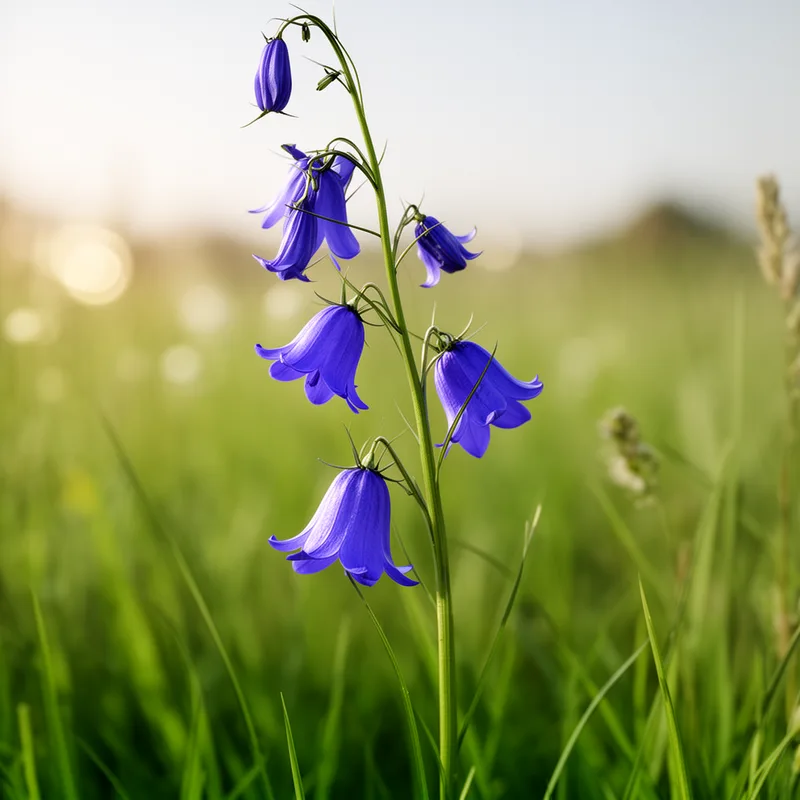
harebell


 1
8.7
1
8.7
- noun
- /ˈhɛrˌbɛl/
- In the meadow, clusters of harebell flowers swayed gently in the breeze.
Examples
-
Her eyes were the pale color of harebell blossoms.
Fiction book (1997) -
The lemon trees fell away, the coffee fields, the wild harebell, the purple violets.
Fiction book (2001) -
We quarreled; I was incoherent with fear, and he was growing furious until he backed me up against the harebell bank.
Fiction book (1994) -
The air was thick with the sweet, nostalgic smell of freshly cut grass, and the paths were edged with pale harebells and blue aubretia.
Fiction book (1995) -
The delicate, blue harebell blooms brightened the rocky hillside.
-
We spotted a field dotted with harebell plants during our hike.
Synonyms

A small wild plant with thin stems and blue bell-shaped flowers often called harebell

A small plant with pale blue bell-shaped flowers that grows in woods from Maryland to Georgia
Compounds
A small plant with pale blue bell-shaped flowers that grows in woods from Maryland to Georgia
Surface Forms
Morphology
Etymology
Harebell is made from the two words hare and bell. The plant has small, blue, bell-shaped flowers often found in fields where hares live, so think of it as a 'little bell for a hare'.