
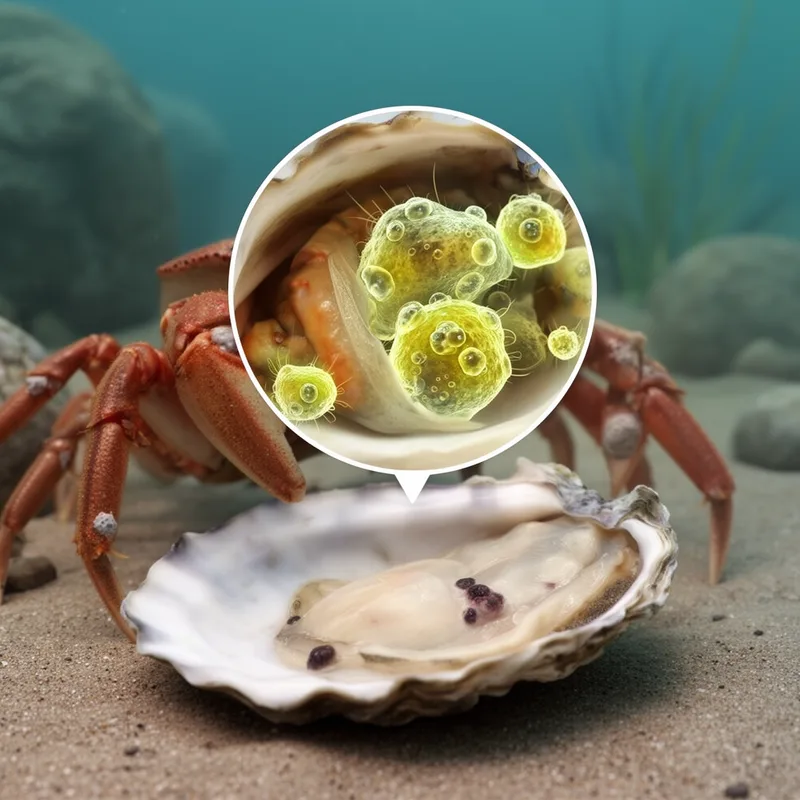
haplosporidian
- noun
- /ˌhæpləˈspɔːrɪdiən/
- Specialized
- The life cycle of a haplosporidian involves several developmental stages inside its host.
Examples
-
Researchers discovered a new haplosporidian infecting oysters along the coastline.
-
The haplosporidian was discovered in the tissue of the infected fish.
-
Marine biologists are studying how haplosporidians affect crab populations in estuarine environments.
-
Scientists are studying haplosporidians to understand their life cycle.
-
Marine biologists are studying how haplosporidians affect crab populations in estuarine environments.
-
Researchers discovered a new haplosporidian infecting oysters along the coastline.
-
The life cycle of a haplosporidian involves several developmental stages inside its host.
Surface Forms
Morphology
haplosporidian = Haplosporidia (opaque) = haplo + spor + idia + ian
Formed from a technical taxonomic name plus the agent/membership suffix '-ian'; this specialized scientific formation is not transparent to average learners.
Etymology
Haplosporidian comes from Greek parts haplo- meaning 'single' and spora, which is the same root as English spore meaning 'seed' or 'spore'. So, you can remember a haplosporidian as a tiny parasite often started by a single spore that infects animals like oysters and crabs.

