
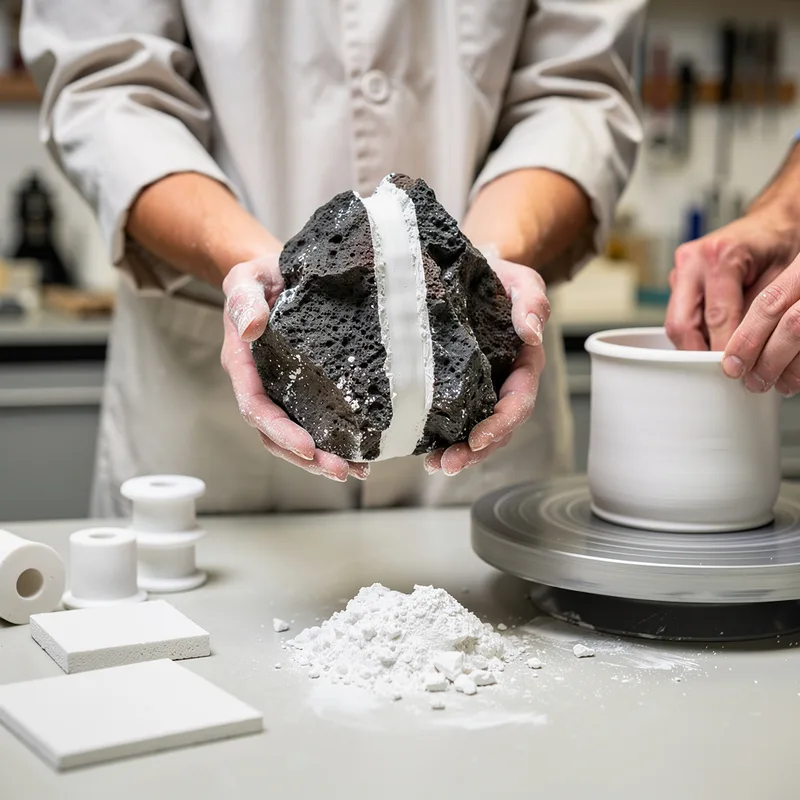
halloysite
 1
9.9

- noun
- /ˈhæloʊˌsaɪt/
- Specialized
- The ceramic artist preferred using halloysite for its unique properties.
Examples
-
Scientists use halloysite to improve the strength of ceramics.
-
Many halloysites are used in the production of ceramics.
-
The white layer in the rock sample was identified as halloysite by the laboratory.
-
Ceramic manufacturers often use halloysite because of its unique properties.
-
The presence of halloysite indicates past volcanic activity in the region.
-
The geologist discovered halloysite in the volcanic rock.
-
In volcanic regions, halloysite can be found embedded in the rocks.
Surface Forms
Morphology
halloysite = Halloy (opaque) = halloy + ite
Formed from an eponym (a proper name) plus the mineral-forming suffix '-ite'; the name does not transparently indicate the clay's properties to typical learners.
Etymology
Halloysite is named after the Belgian scientist d'Halloy, who studied rocks, and the ending -site means 'rock' or 'stone', as in graphite. So halloysite is like 'd'Halloy's stone', which is why the name refers to this clay mineral used in ceramics and industry.