
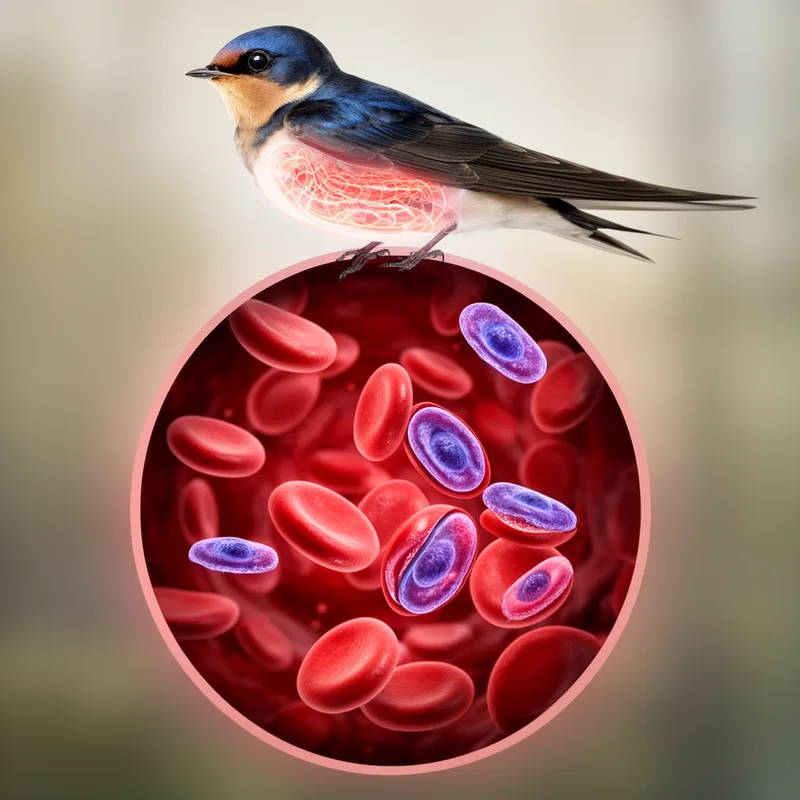
haemoproteid
- noun
- /ˌhiːməˈproʊtiːd/
- UK
- Many species of birds can be infected by haemoproteids transmitted by biting insects.
Examples
-
The researcher identified a new haemoproteid in the blood samples of migratory swallows.
-
The haemoproteid was found in the blood of the infected bird.
-
Many veterinarians study the effects of haemoproteids on migratory bird populations in the field.
-
A haemoproteid infects birds.
-
Many species of birds can be infected by haemoproteids transmitted by biting insects.
-
The researcher identified a new haemoproteid in the blood samples of migratory swallows.
-
The haemoproteid was found in the blood of the infected bird.
Surface Forms
Morphology
haemoproteid = haemoproteus (opaque) = haemo + prote + id
The immediate base is the scientific genus name 'haemoproteus', which is not transparent to most learners.
Etymology
Haemoproteid starts with haemo- meaning 'blood' (the same root you see in haemoglobin) and ends with -proteid, from the parasite group name Haemoproteus, so it literally means a blood parasite; that's why the word is used for parasites that live in the blood of birds.

