
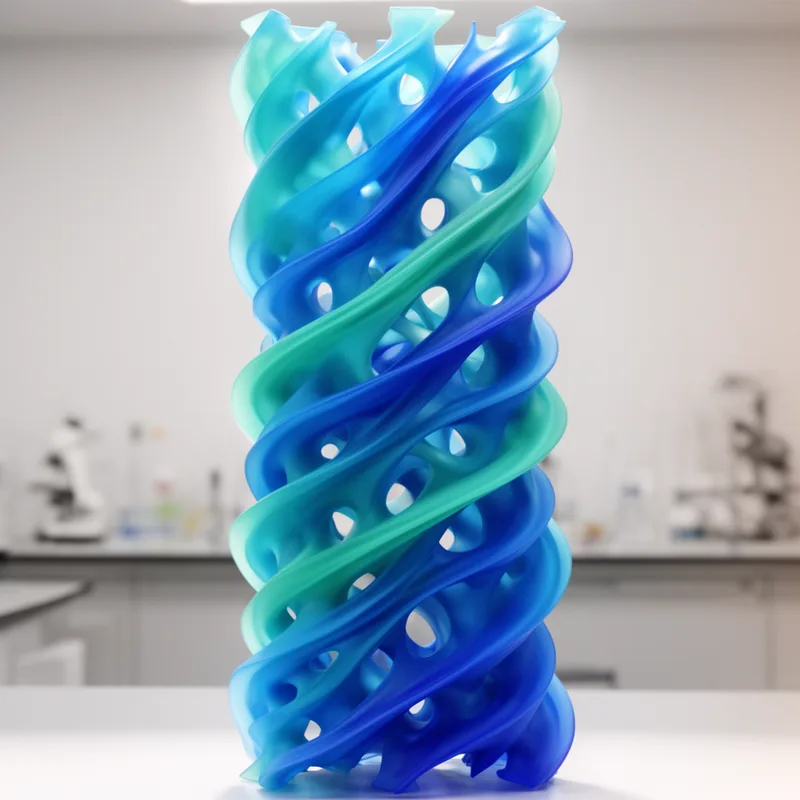
gyroidal


 1
9.9
- adjective
- /dʒaɪˈrɔɪdəl/
- Specialized
- Mathematicians study gyroidal surfaces for their unique geometric properties.
Examples
-
Some marine shells have a distinctly gyroidal structure that fascinates biologists.
-
The scientist observed a gyroidal pattern in the newly formed crystal.
-
The sculpture has a gyroidal design that captivates viewers.
-
Can you explain what a gyroidal surface looks like?
-
The architect's design featured a stunning gyroidal surface that caught the light beautifully.
-
In mathematics, a gyroidal shape is known for its intricate, twisting paths through three-dimensional space.
-
Scientists studied the gyroidal pattern formed in the foam to understand its unique structural properties.
Surface Forms
Morphology
gyroidal = gyroid (semi-transparent) = gyroid + al
The adjective is straightforwardly formed with -al from the technical noun 'gyroid', but the base word itself is specialized and may not be familiar to many learners.
Etymology
The word gyroidal comes from the prefix gyro- meaning 'turn' or 'circle' and the ending -oid meaning 'like', as in gyroscope or gyrate. So a gyroidal shape is one that 'turns' and twists in three dimensions, making the spiraling, curved forms you see in some crystals and shells.