

grouse whortleberry
- noun
- /ˈɡraʊs ˈwɔːrtəlˌbɛri/
- US
- The grouse whortleberry thrives in the moist forests of the Pacific Northwest.
Examples
-
Bears in the region often feed on the bright red grouse whortleberry fruits in late summer.
-
We spotted a cluster of grouse whortleberry bushes along the hiking trail.
-
The grouse whortleberry is often found in mountainous regions.
-
I picked some grouse whortleberries during my hike last weekend.
-
Bears in the region often feed on the bright red grouse whortleberry fruits in late summer.
-
The grouse whortleberry thrives in the moist forests of the Pacific Northwest.
-
We spotted a cluster of grouse whortleberry bushes along the hiking trail.
Synonyms
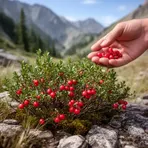
A low shrub that grows in mountains and makes small red edible berries

A small bush with red berries that grows in northwest North America

A low bush with small red berries that grows on mountain slopes and in forests
Surface Forms
Morphology
This is a straightforward noun–noun compound where 'grouse' qualifies 'whortleberry', so a learner who knows 'grouse' (a bird) and 'whortleberry' (a berry-bearing shrub) can infer it is a kind of whortleberry associated with grouse. The meaning follows common English compound formation (type-of X) and is compositionally predictable, so it would be understandable to a B1 learner knowing both constituents.
Etymology
Grouse whortleberry may come from a simple image: the bright red berries were often eaten by grouse, and 'whortleberry' was an old name for small wild 'berries'. So the name links the bird (grouse) and the fruit (whortleberry) and helps you remember it is a shrub that makes red berries.

