

grisette
- noun
- Archaic
- During the 19th century, grisettes often worked as seamstresses or shop assistants to support their families.
Examples
-
I noticed the other characters you created, the good grisettes who worked hard and sent their meager earnings back to their poor mothers.
Fiction book (1992) -
This form of representation lived on in nineteenth-century representations of kept women (a typical stage on the career trajectory of imaginary grisettes), who were often portrayed reclining and reading (Fig. 14). 74
Academic text (2014) -
The German title and the Austrian publisher suggest that the women in the painting are not eighteenth-century French women, and neither are they Parisian grisettes.
Academic text (2014) -
As a "mannerist," Borsos was a copyist not of the grisettes themselves but of their representations.
Academic text (2014) -
The "grisettes and lorettes" mentioned by the critic—working-class women on the verge
Academic text (2014) -
In the cafes of Paris, young grisettes gathered to discuss the latest fashion trends and to dream of a better life.
-
The artist captured the essence of a grisette in her painting, showcasing a young woman with a gentle smile and simple attire.
Synonyms
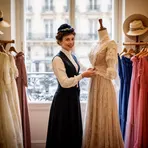
A young woman who worked in Paris shops selling clothes in the early 1900s

A woman who works in fields to grow crops
Surface Forms
Morphology
grisette = gris + ette
Originally 'little grey one' (transparent if one recognises French 'gris' and diminutive '-ette'), but the historical sense 'young working-class woman' involves semantic shift and is not directly inferable for many learners.
Etymology
Grisette (woman or mushroom) comes from French gris 'gray' and -ette meaning 'small', so a working young woman was called a 'little gray one' because of her gray dress, and a small gray mushroom also took the same name. This explains why grisette can mean either a young working-class woman or a small gray fungus.

