
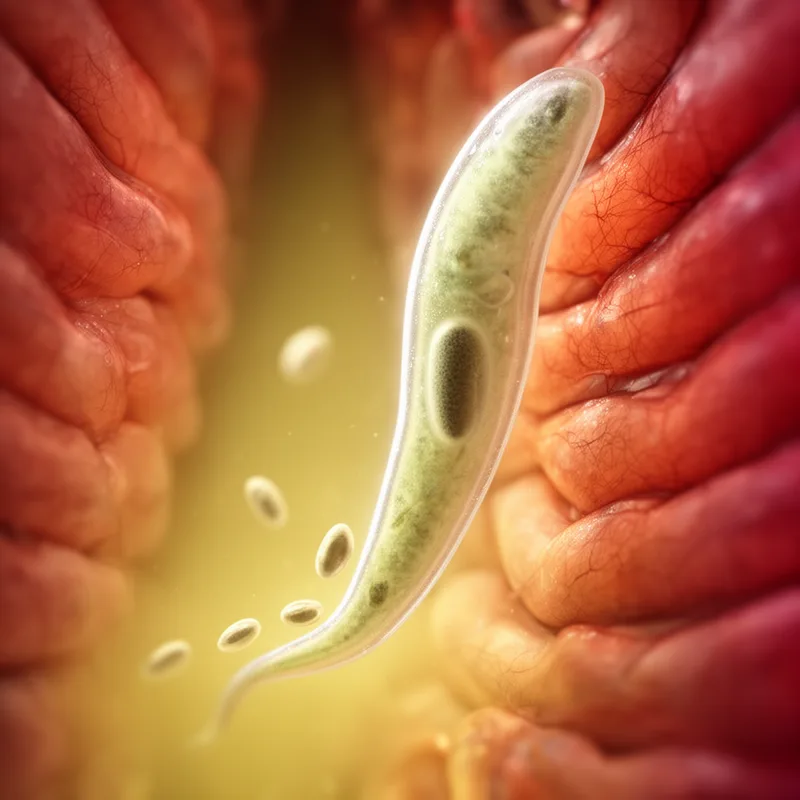
gregarine
- noun
- /ˈɡrɛɡəˌrin/
- Specialized
- The gregarine invaded the locust’s gut, disrupting its digestive processes.
Examples
-
The gregarine was found in the insect's intestines.
-
Researchers studied the life cycle of the gregarine found in freshwater shrimp.
-
A single gregarine can produce numerous spores during its parasitic phase.
-
Researchers studied the life cycle of the gregarine parasite.
-
Scientists discovered a new species of gregarine that exclusively infects beetles in a laboratory setting.
-
The gregarine proliferated rapidly within the intestines of the affected caterpillars.
-
Understanding how the gregarine operates in insect hosts can help develop pest control strategies.
Synonyms

A small animal that lives inside another animal's body, usually as a worm in the intestines

A parasite that lives inside an animal's body, often in the intestines

A parasite that lives inside an animal's body, often in the intestines
Surface Forms
Morphology
gregarine = gregar + ine
The element 'gregar-' is a Latin combining form (not a standalone English word) and '-ine' yields a technical taxonomic/chemical term; the resulting noun is specialized and its meaning is not derivable by an average B1 learner from the parts.
Etymology
The word gregarine comes from the Latin root greg- meaning 'flock' or 'group', the same root as in gregarious. These parasites often live together in the guts of insects, so the name helps you picture a little 'flock' of tiny creatures inside a host.

