
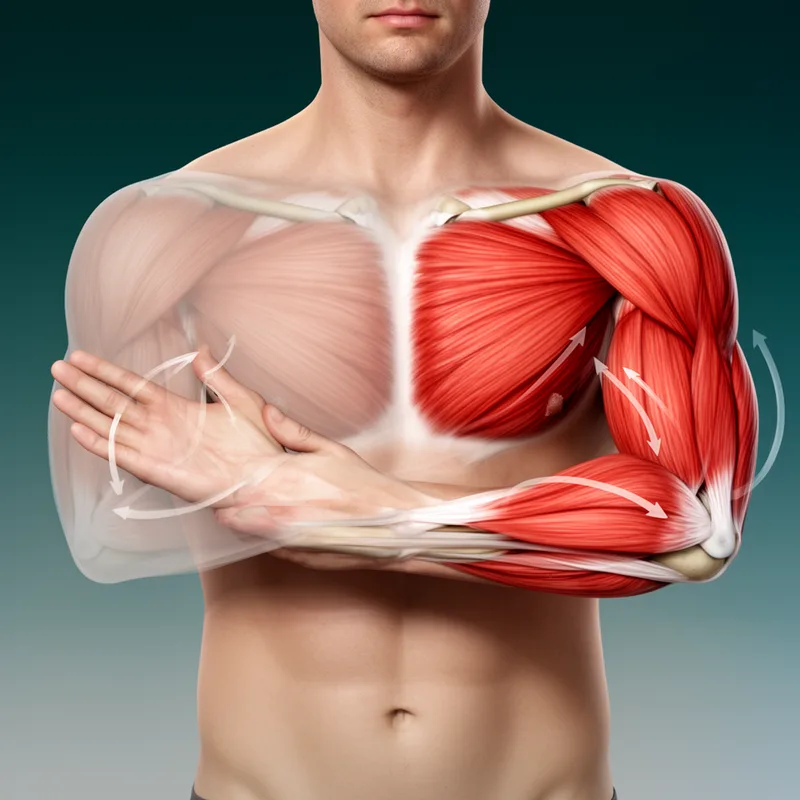
greater pectoral muscle
- noun
- /ˈɡreɪtər ˈpɛk.tər.əl ˈmʌs.əl/
- Specialized
- The greater pectoral muscle is heavily engaged during push-ups and bench press exercises.
Examples
-
Physical therapy after a shoulder injury often targets the greater pectoral muscle to restore strength and mobility.
-
In anatomical diagrams, the greater pectoral muscle is usually shown covering the front of the upper chest.
-
The greater pectoral muscle is essential for upper body strength.
-
He works on his greater pectoral muscles at the gym.
-
In anatomical diagrams, the greater pectoral muscle is usually shown covering the front of the upper chest.
-
Physical therapy after a shoulder injury often targets the greater pectoral muscle to restore strength and mobility.
-
The greater pectoral muscle is heavily engaged during push-ups and bench press exercises.
Synonyms

A large chest muscle that pulls the arm toward the body and turns it inward

A large chest muscle that helps move the arm toward the body and turn it
Surface Forms
Morphology
The phrase is a straightforward adjective + noun composition: 'pector(al) muscle' denotes a chest muscle and 'greater' simply marks the larger/major one, so the full meaning is directly predictable from the parts. This follows a regular morphological pattern (adjective modifying a noun) and is not idiomatic, so an average B1 learner who knows the constituents would understand it.
Etymology
Greater pectoral muscle comes from words that name the big chest muscle — pectoral means 'chest' and greater means 'larger'. Imagine a large muscle on the front of the chest that pulls the arm in toward the body and turns it inward, so the name tells you both where the muscle is and what it does.

