
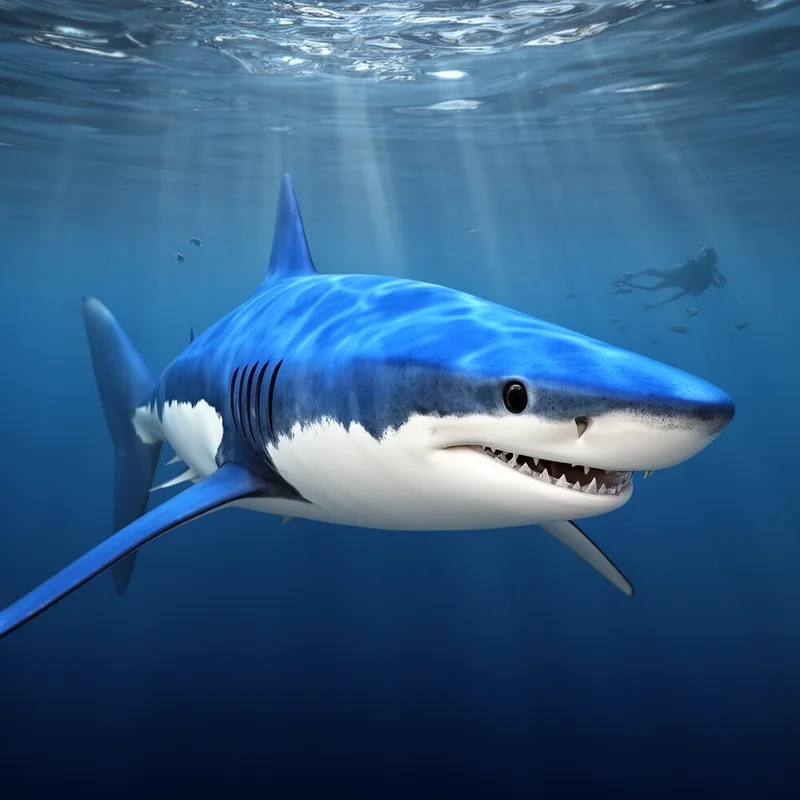
great blue shark
- noun
- /ɡreɪt blu ʃɑrk/
- Historically, shipwreck survivors feared the presence of the great blue shark in the aftermath of maritime disasters.
Examples
-
The great blue shark is often seen near the ocean's surface, searching for prey.
-
The great blue shark is known for its size and speed.
-
Divers sometimes encounter the great blue shark in the open water, especially in temperate zones.
-
Many divers are fascinated by the great blue shark.
-
Divers sometimes encounter the great blue shark in the open water, especially in temperate zones.
-
Historically, shipwreck survivors feared the presence of the great blue shark in the aftermath of maritime disasters.
-
The great blue shark is often seen near the ocean's surface, searching for prey.
Synonyms

 4
4.5
4
4.5

A slim, fast shark with a blue back and white belly that lives in the open ocean

A long thin blue shark with a white belly that lives in open oceans and can harm people
Surface Forms
Morphology
The phrase is directly compositional: 'great' (very large) + 'blue' (color) + 'shark' (marine fish) describes a large, blue-colored shark. This adjective-adjective-noun combination follows normal English composition and is cross-linguistically transparent, so a B1 learner who knows the constituent words will understand the meaning.
Etymology
The noun great blue shark comes from how the animal looks: a very great and blue shark often seen in the open sea. Because people often saw these sharks near shipwrecks, the name brings to mind a big ocean shark that is 'dangerous' to humans today.